
Description
Pass Masonry Level 4 with confidence
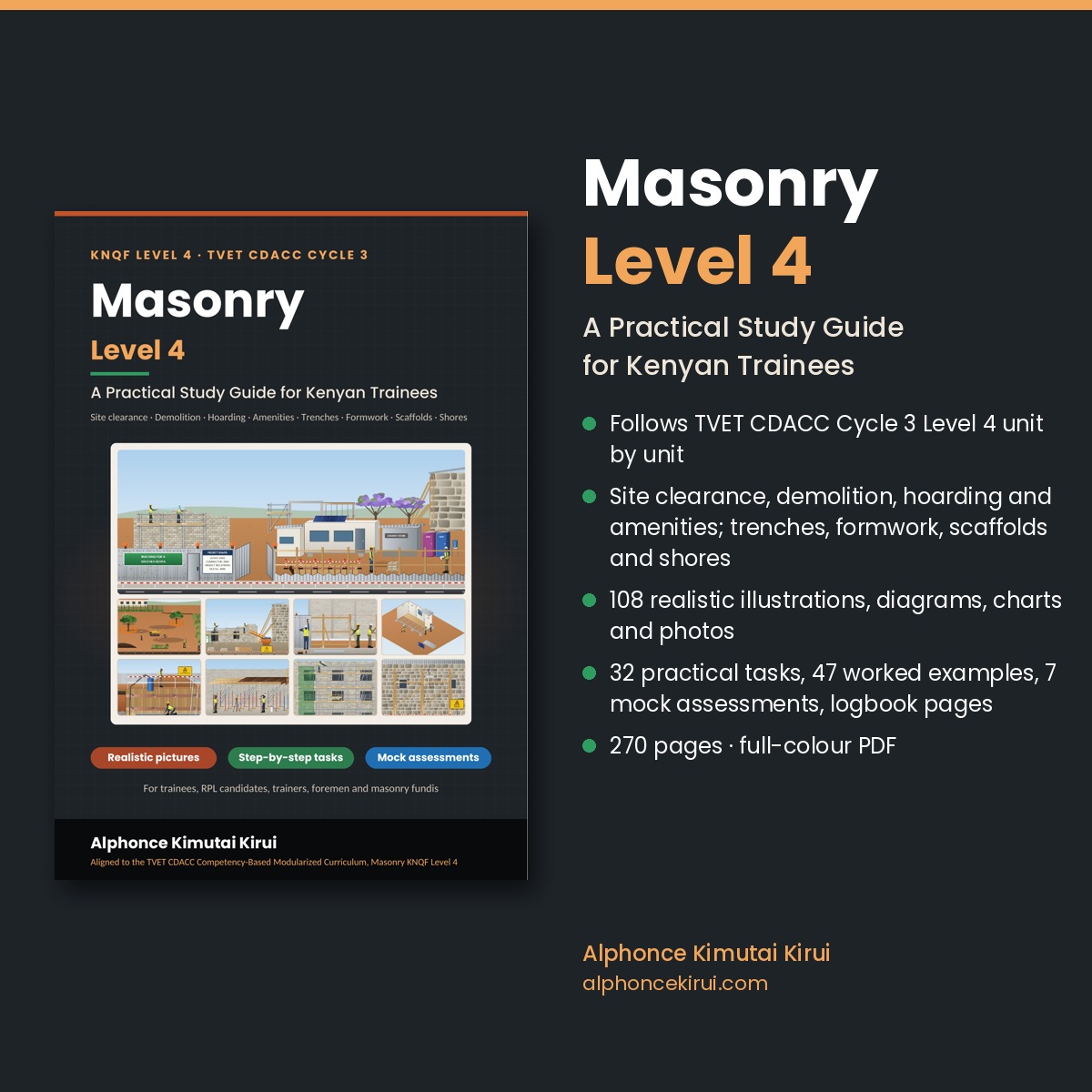
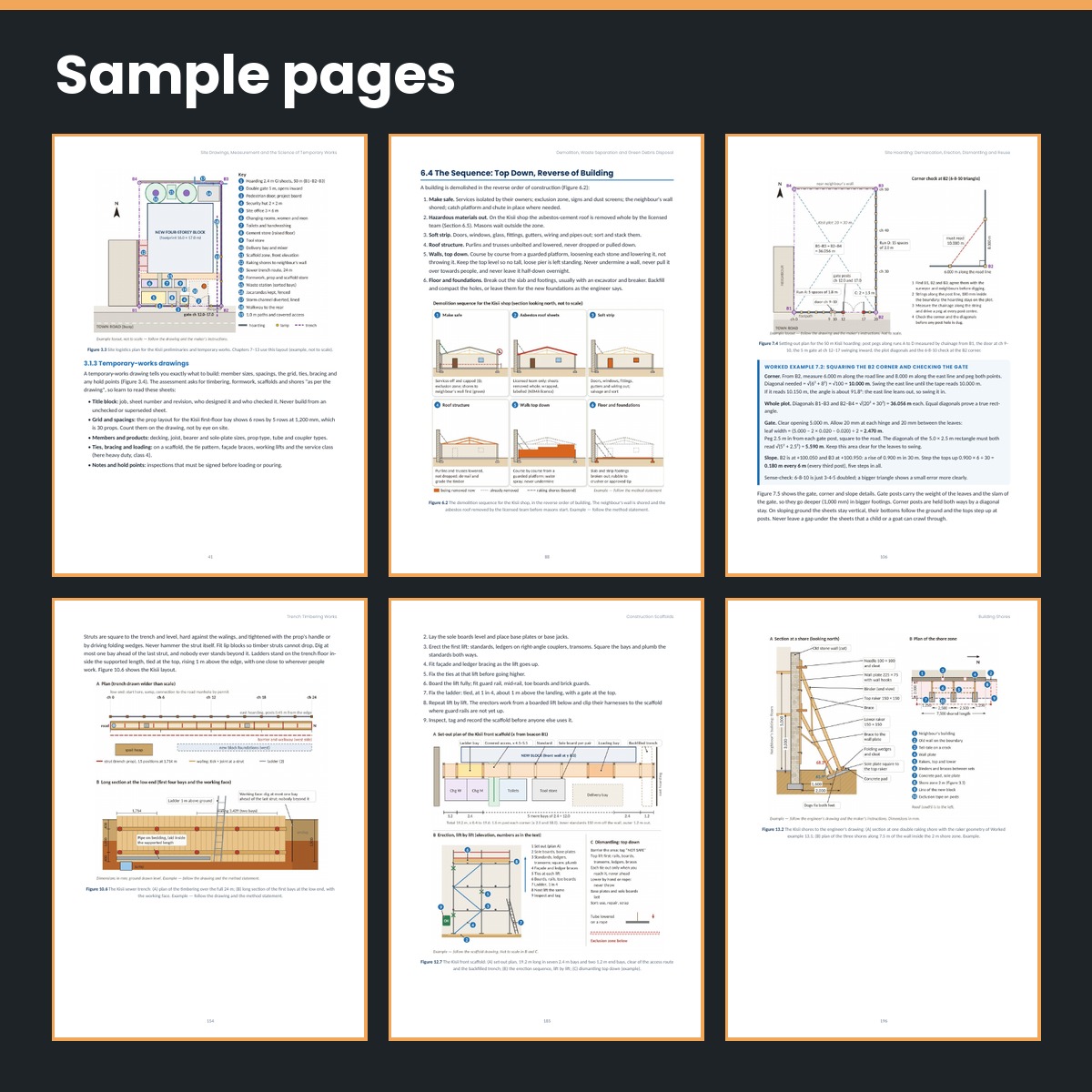
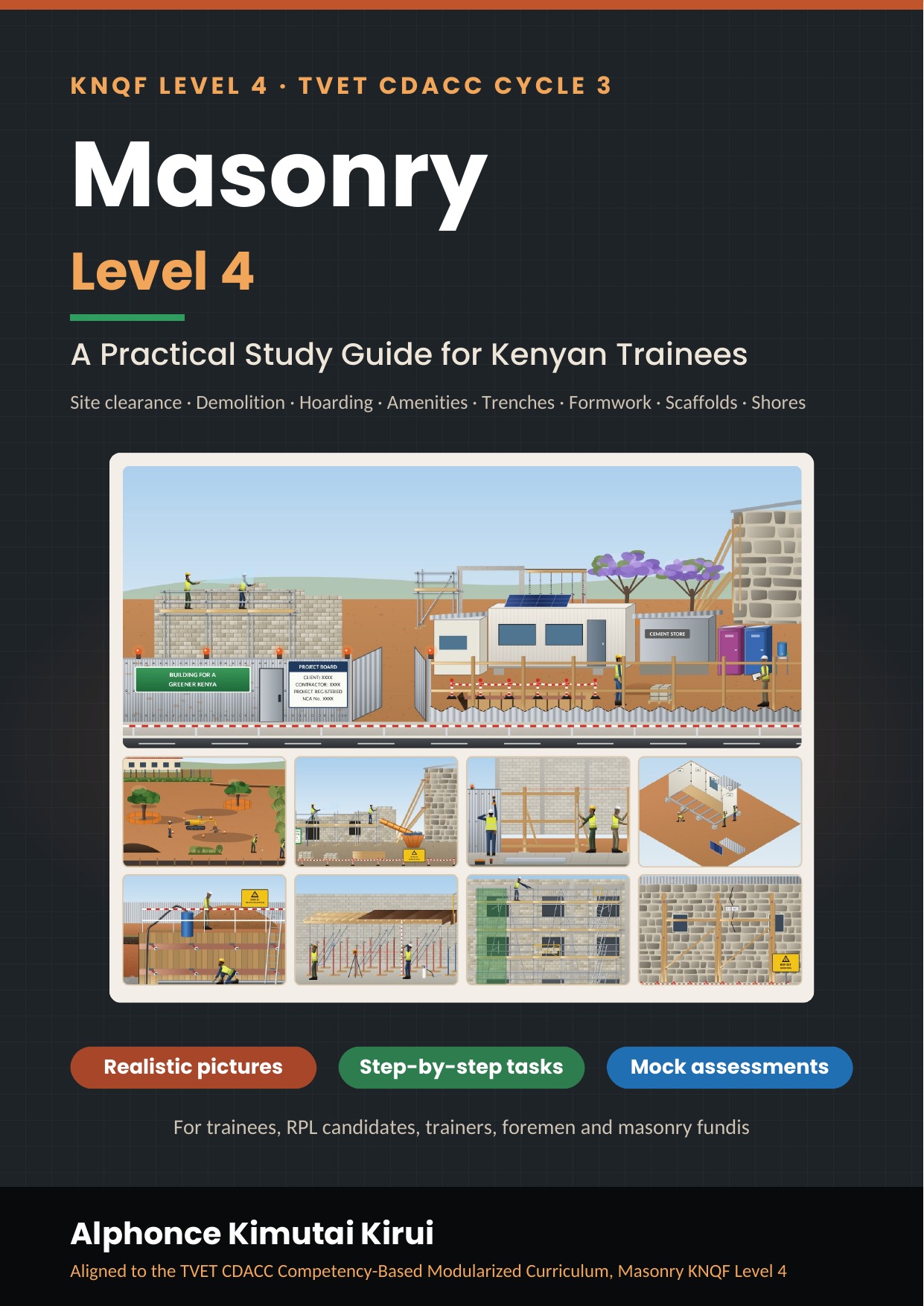
Masonry Level 4: A Practical Study Guide for Kenyan Trainees covers the two new units of the TVET CDACC Masonry Level 4 course (Cycle 3, greened edition) and the industrial attachment. It is written in plain English for KCSE leavers and Level 3 holders and illustrated with realistic pictures, accurate site and temporary-works drawings and data charts. One real-looking town site runs through the book: an old stone shop with an asbestos-cement roof is taken down, the plot is cleared and hoarded, the site office, cement store and toilets go up by the gate, and then the sewer trench is timbered, the first-floor slab is propped, the front scaffold climbs and raking shores hold up the neighbour’s old wall.
Not sure yet? Download the free sample (40 pages): the front matter, Chapter 1 and the full Chapter 7 on site hoarding, from demarcation and setting out to erection, costing, dismantling and reuse.
The Level 3 units (Masonry Works, Masonry Works Finishes I and Masonry Units Production) are covered in the companion Masonry Level 3 guide.
Who is this book for?
- Level 4 trainees in vocational training centres, technical colleges and polytechnics
- RPL candidates — masons and foremen who already set up sites and put up props and scaffolds and want their skills certified
- Trainers who need ready-made explanations, worked examples, practical tasks and record sheets
- Working masons, foremen and fundis with contractors, county works departments, hire firms and demolition and salvage contractors
What’s inside
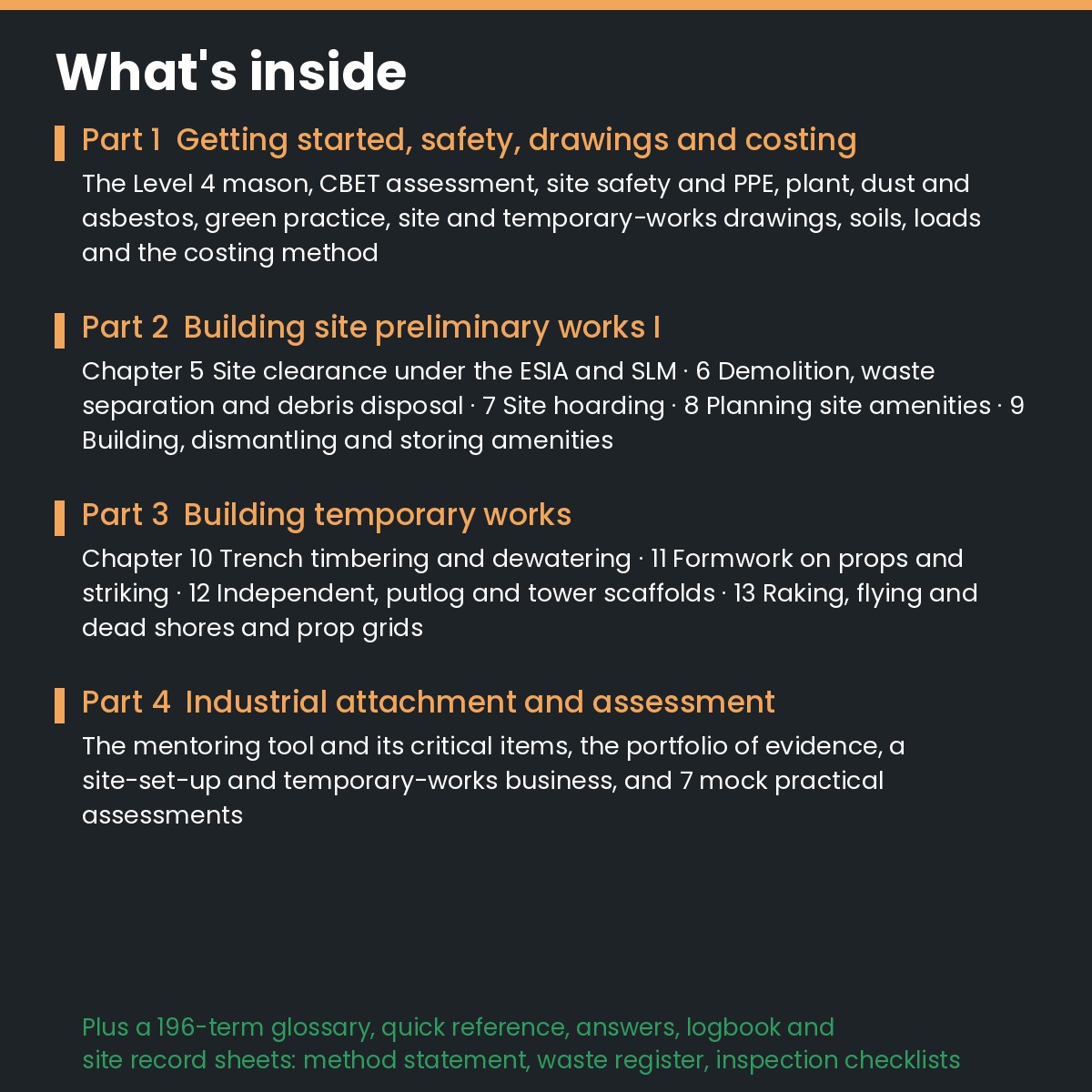
Part 1: Getting Started, Safety, Drawings and Costing – the Level 4 mason’s job, CBET assessment and where the marks are, site safety, PPE, plant, dust and asbestos, green practice, site, logistics and temporary-works drawings, soils, loads and materials science, and the costing method the whole book uses.
Part 2: Building Site Preliminary Works I (Unit 1) – site surveys and biodiversity audits, environmentally responsible clearance under the ESIA and SLM, demolition with salvage, waste separation and debris records, site hoarding from demarcation to reuse, and planning, building, dismantling and storing site amenities.
Part 3: Building Temporary Works (Unit 2) – trench timbering systems and dewatering, slab, beam, column and wall formwork on adjustable props and safe striking, independent, putlog and mobile tower scaffolds with inspection and tagging, and raking, flying and dead shores and prop grids.
Part 4: Industrial Attachment and Assessment – the mentoring tool and its critical items, the portfolio of evidence, a small site-set-up and temporary-works business, and mock practical assessments marked like the CDACC tool.
Reference: a 196-term glossary, a quick reference of book constants, clearance and demolition values, hoarding and amenity rules, trench, formwork, scaffold and shore reminders, prices and the costing formula, answers with full working to every practice question, and photocopiable logbook, method-statement, waste-register and trench, formwork and scaffold inspection sheets.
Why trainees and trainers like it
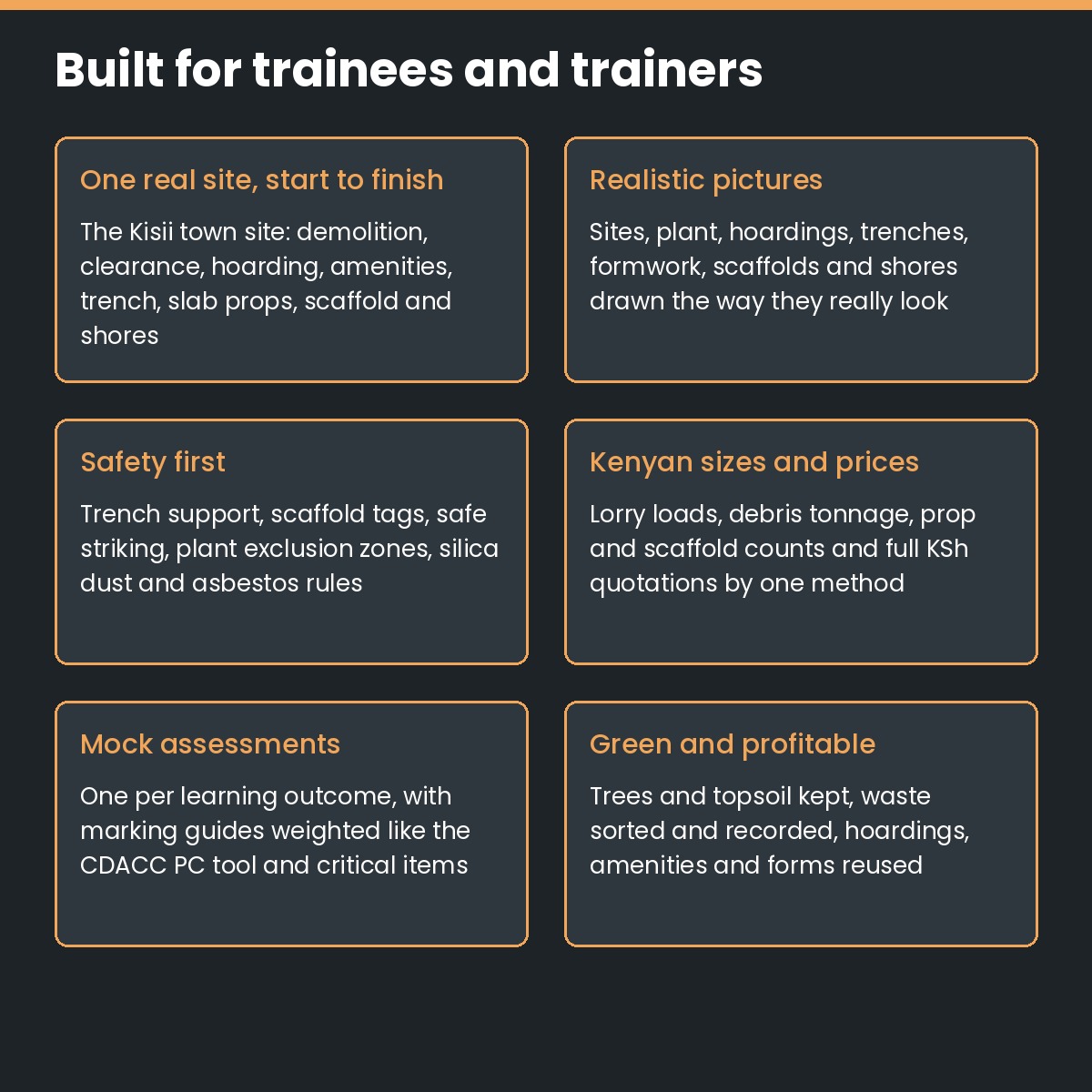
- Follows your curriculum: same units, learning outcomes and hours as the official CDACC Cycle 3 Level 4 curriculum.
- Kenyan practice: the National Building Code 2024, NEMA and county rules, Kenyan materials, plant hire and prices.
- Safety first: supported trenches, tagged scaffolds, props struck only on instruction, plant exclusion zones, silica dust and asbestos left to licensed handlers.
- Real Kenyan costings: clearance and lorry loads, demolition salvage, a hoarding, a site office, trench props, slab formwork and scaffold hire, all by one clear method.
- Green and profitable: trees and topsoil kept, waste sorted and recorded, and hoardings, amenities, forms and props reused job after job.
- Independently checked: the technical content was checked by an independent reviewer, and every worked example and answer was recalculated.
Format and delivery
PDF, A4, 270 pages, full colour. Download instantly after payment (5 downloads allowed, no expiry). Single-user licence: for your own study or teaching, not for resale or sharing. Pay by M-Pesa or card.
This is an independent study guide. It is not published or endorsed by TVET CDACC, TVETA or the Ministry of Education. Always train under a qualified trainer and wear the correct PPE.
Reviews
There are no reviews yet.