
Description
Pass Motor Vehicle Mechanics Level 3 with confidence
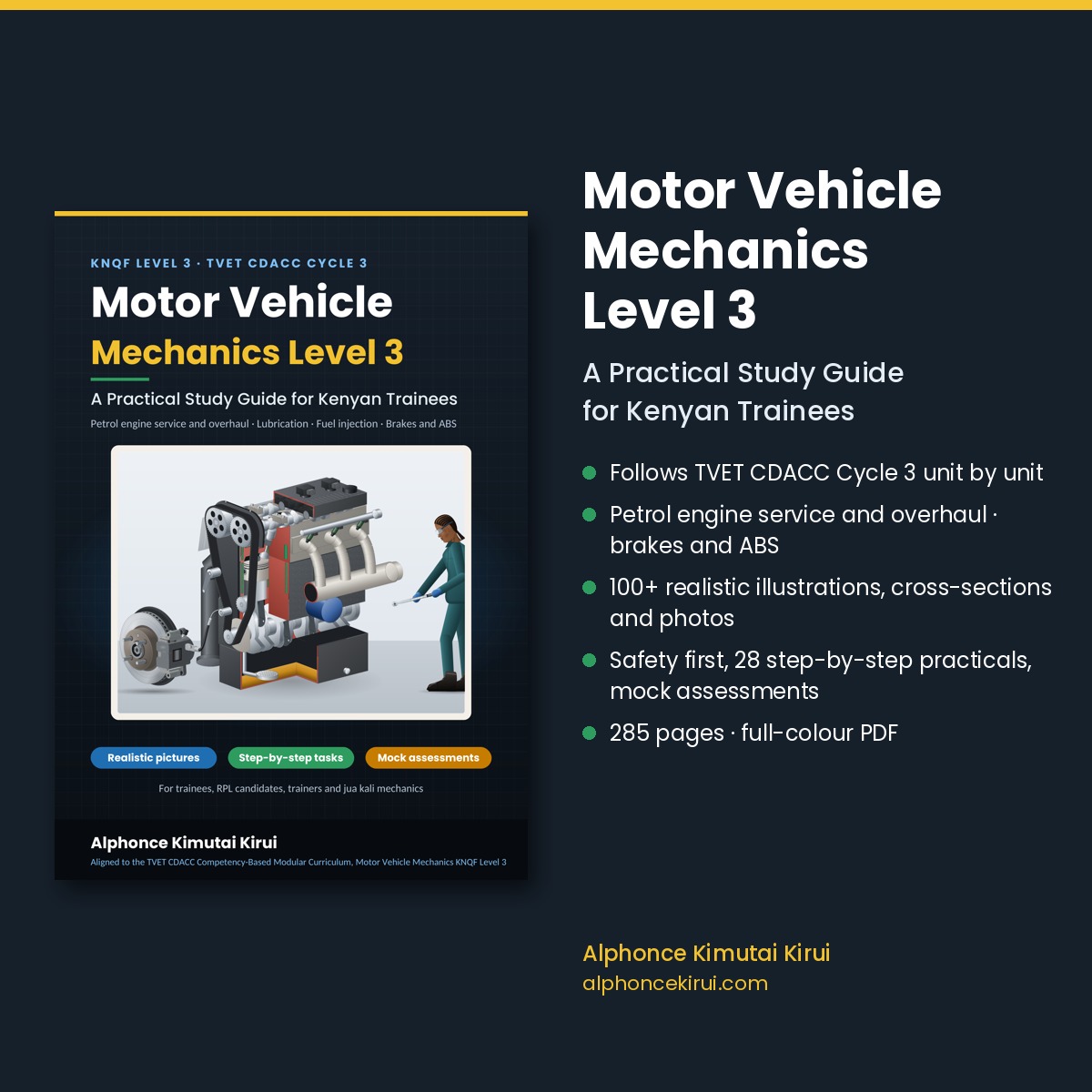
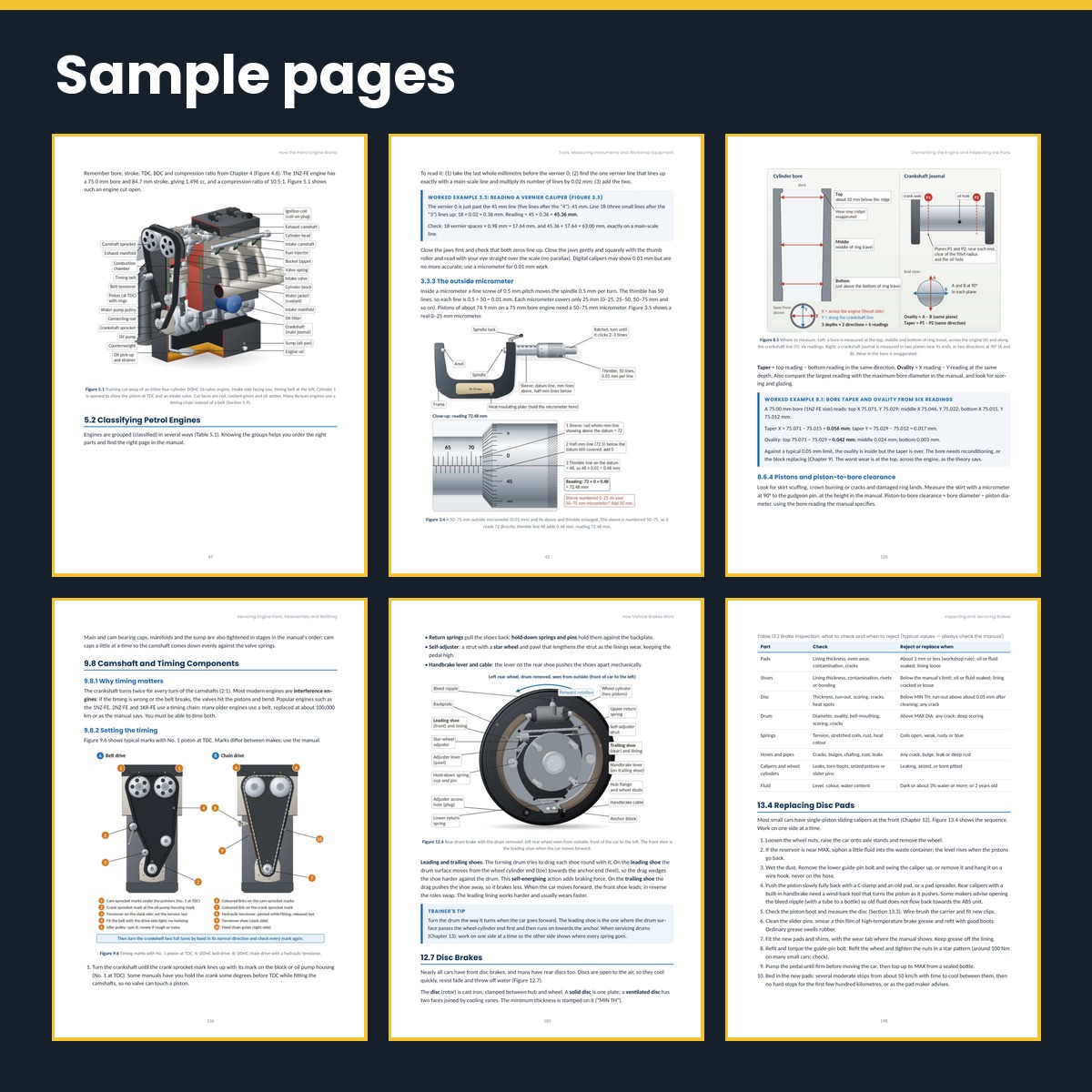
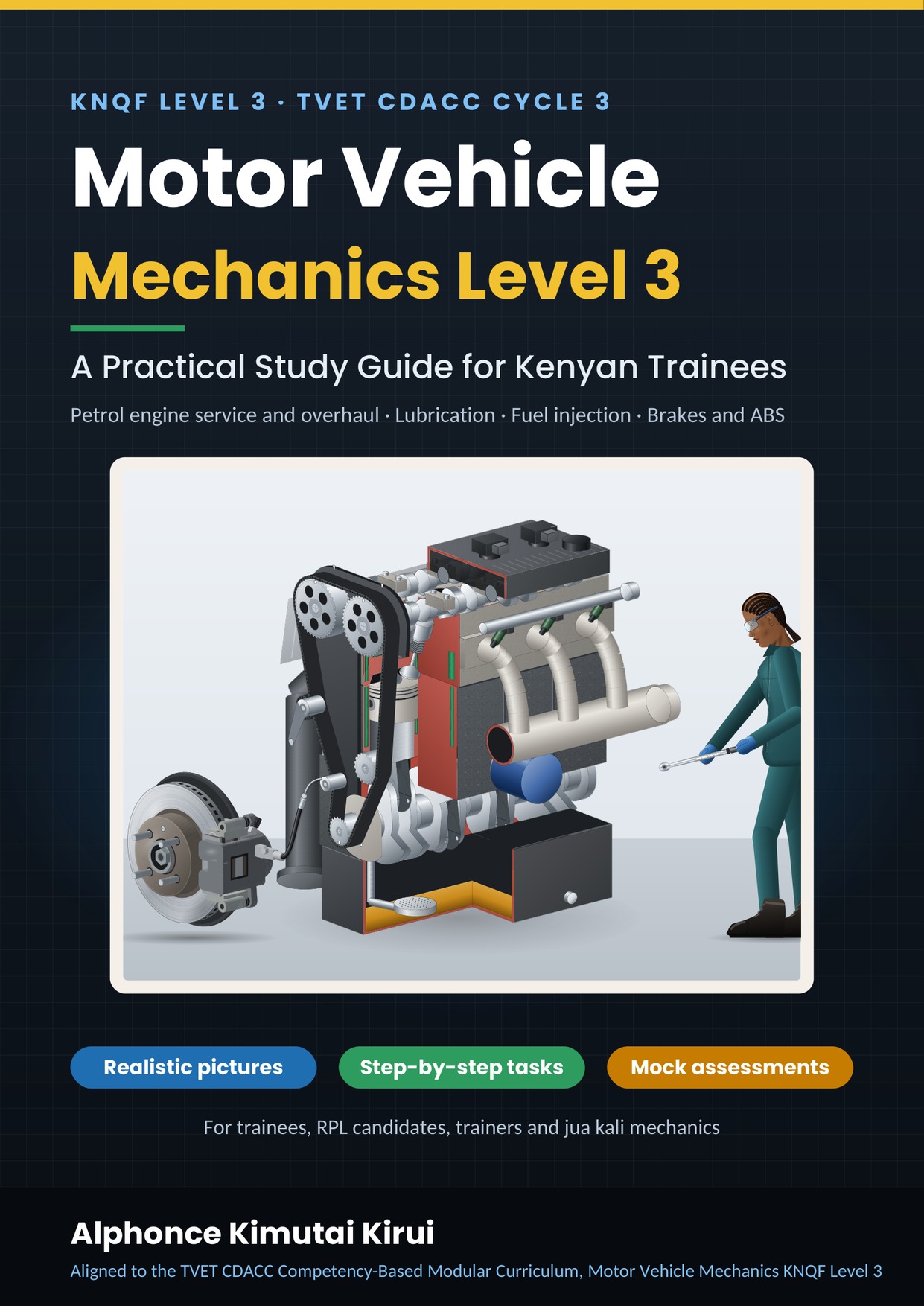
Motor Vehicle Mechanics Level 3: A Practical Study Guide for Kenyan Trainees takes you through the whole TVET CDACC Motor Vehicle Mechanics Level 3 course (Cycle 3, programme 0716254A), assessed as Motor Vehicle Mechanic Level 3. It is written in plain English for KCPE-entry trainees and illustrated with realistic pictures and clear cross-sections: the four-stroke cycle, cylinder heads and valves, pistons and rings, crankshafts and bearings, timing belts and chains, oil and coolant circuits, fuel injectors, master cylinders, calipers and drum brakes, all drawn the way they really look.
Not sure yet? Download the free sample (38 pages): the front matter, Chapter 1 and the full Chapter 6 on routine engine service and inspection.
Who is this book for?
- Level 3 trainees in vocational training centres, technical colleges and polytechnics
- RPL candidates (jua kali mechanics) preparing for CDACC assessment
- Trainers who need ready-made explanations, practical tasks, worked examples and mock assessments
- Anyone starting out in a garage who wants to work safely and to a professional standard
What’s inside
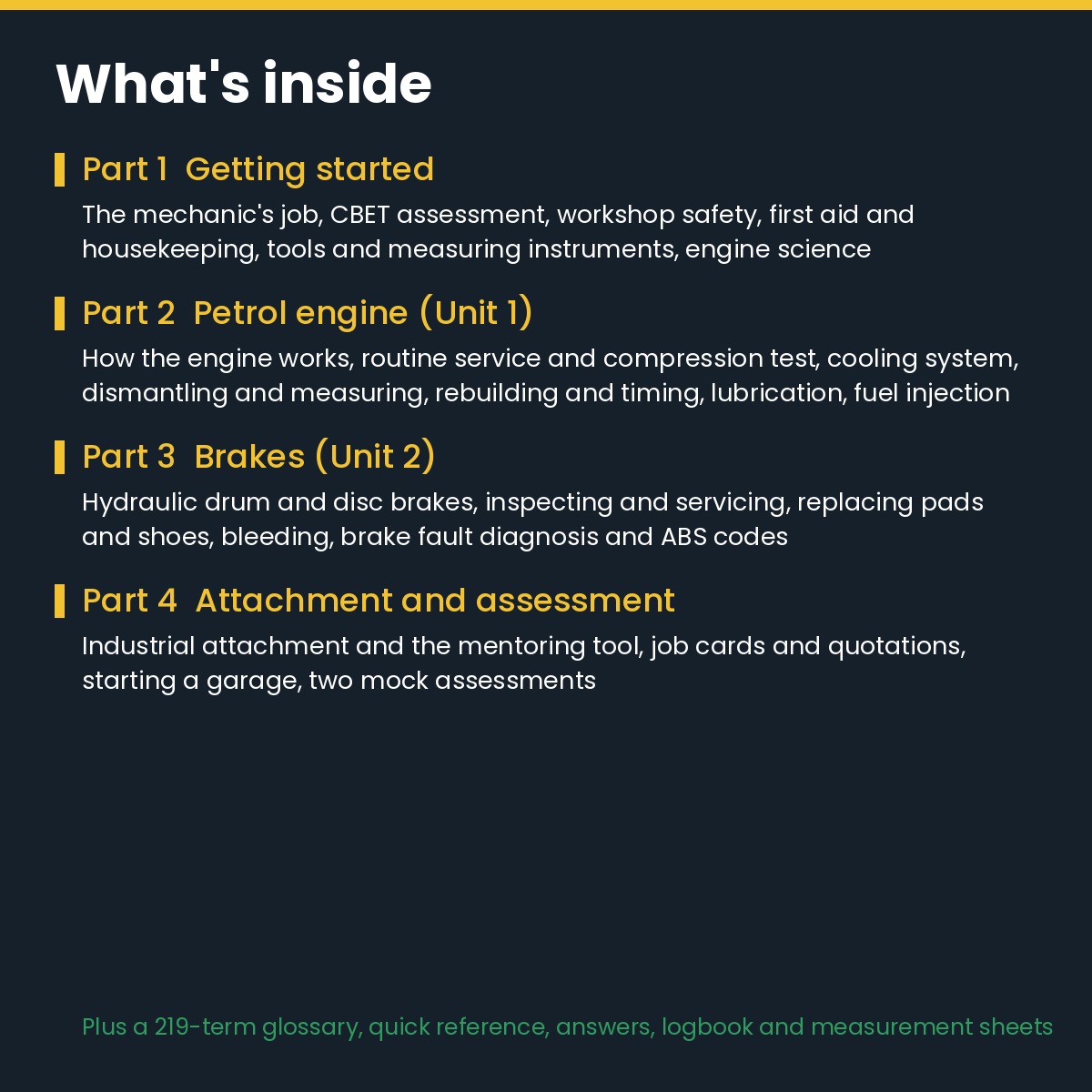
Part 1: Getting Started – the mechanic’s job and career ladder, CBET assessment, workshop safety (axle stands, fire, carbon monoxide, brake dust), first aid and housekeeping with correct waste disposal, hand tools, the vernier and micrometer, test equipment, and the engine science behind every job.
Part 2: Vehicle Petrol Engine Maintenance (Unit 1) – how the petrol engine works, routine service and the compression test, the cooling system, dismantling and measuring an engine, servicing parts, reassembly and timing, the lubrication system and the petrol fuel injection system (TBI, MPI and GDI).
Part 3: Vehicle Braking System Maintenance (Unit 2) – how hydraulic drum and disc brakes work, inspecting and servicing brakes, replacing pads and shoes, bleeding (with the correct order for Kenyan right-hand-drive cars), brake fault diagnosis, ABS codes and wheel speed sensor tests.
Part 4: Attachment, Work and Assessment – the 240-hour industrial attachment and the mentoring tool, job cards and quotations, starting a garage, and a mock practical assessment for each unit with a mark checklist weighted like the CDACC tool.
Reference: a 219-term glossary, a quick reference of typical values, conversions, formulas and abbreviations, answers to every practice question, and photocopiable logbook, engine measurement and brake inspection sheets.
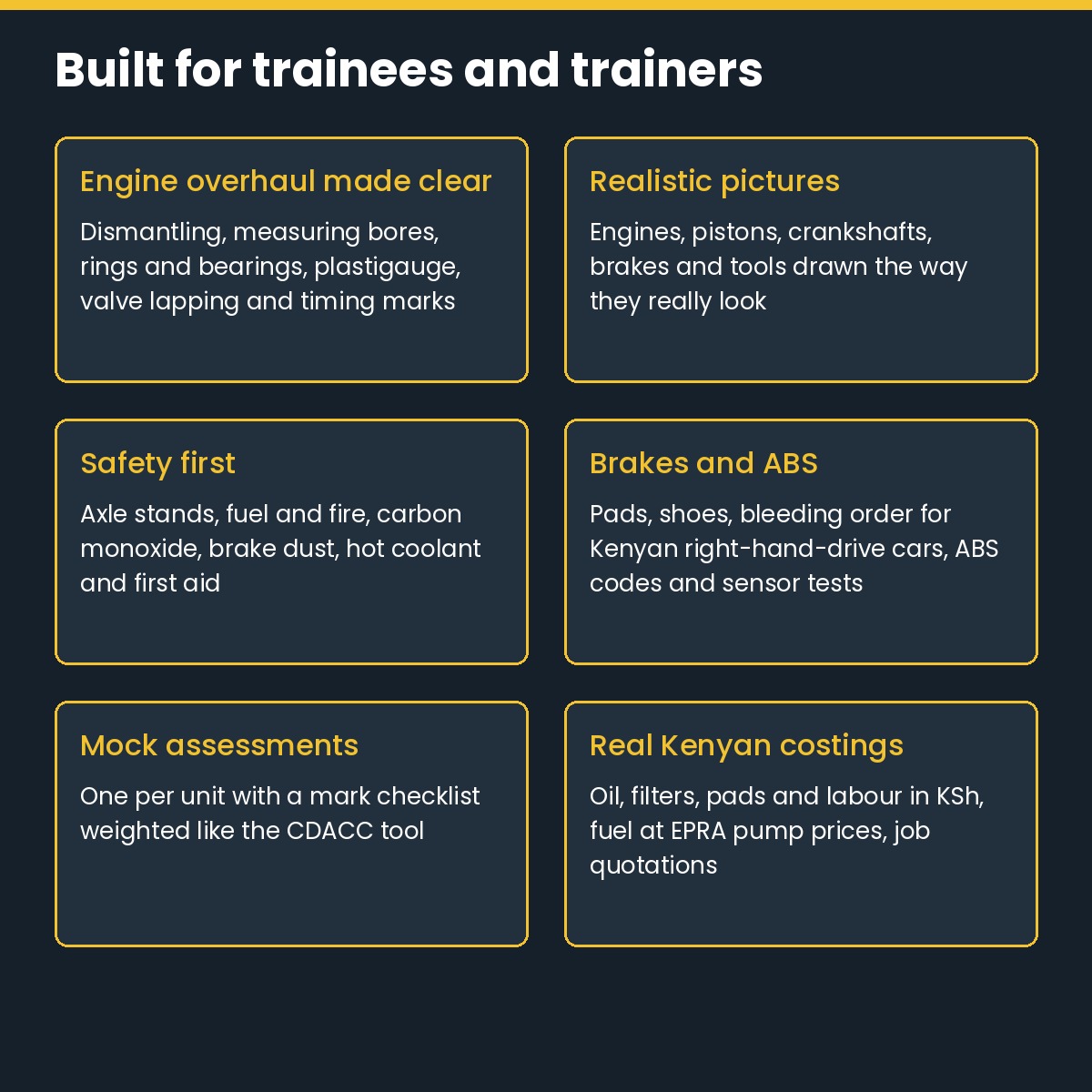
Why trainees and trainers like it
- Follows your curriculum: same units, learning outcomes and hours as the official CDACC Cycle 3 curriculum and occupational standard.
- Pictures you can trust: every illustration and cross-section checked by an independent reviewer.
- Safety first: axle stands, fuel and fire safety, exhaust gas, brake dust and first aid in every chapter.
- Real Kenyan costings: oil, filters, pads and labour in KSh, fuel at EPRA pump prices, and full job quotations.
- Assessment ready: competence checklists, 150 practice questions with answers, 28 practical tasks and two mock assessments.
Format and delivery
PDF, A4, 285 pages, full colour. Download instantly after payment (5 downloads allowed, no expiry). Single-user licence: for your own study or teaching, not for resale or sharing. Pay by M-Pesa or card.
This is an independent study guide. It is not published, endorsed or approved by TVET CDACC, TVETA, NITA, NTSA or the Ministry of Education. Always train under a qualified trainer and follow the vehicle manufacturer’s manual.

Reviews
There are no reviews yet.