
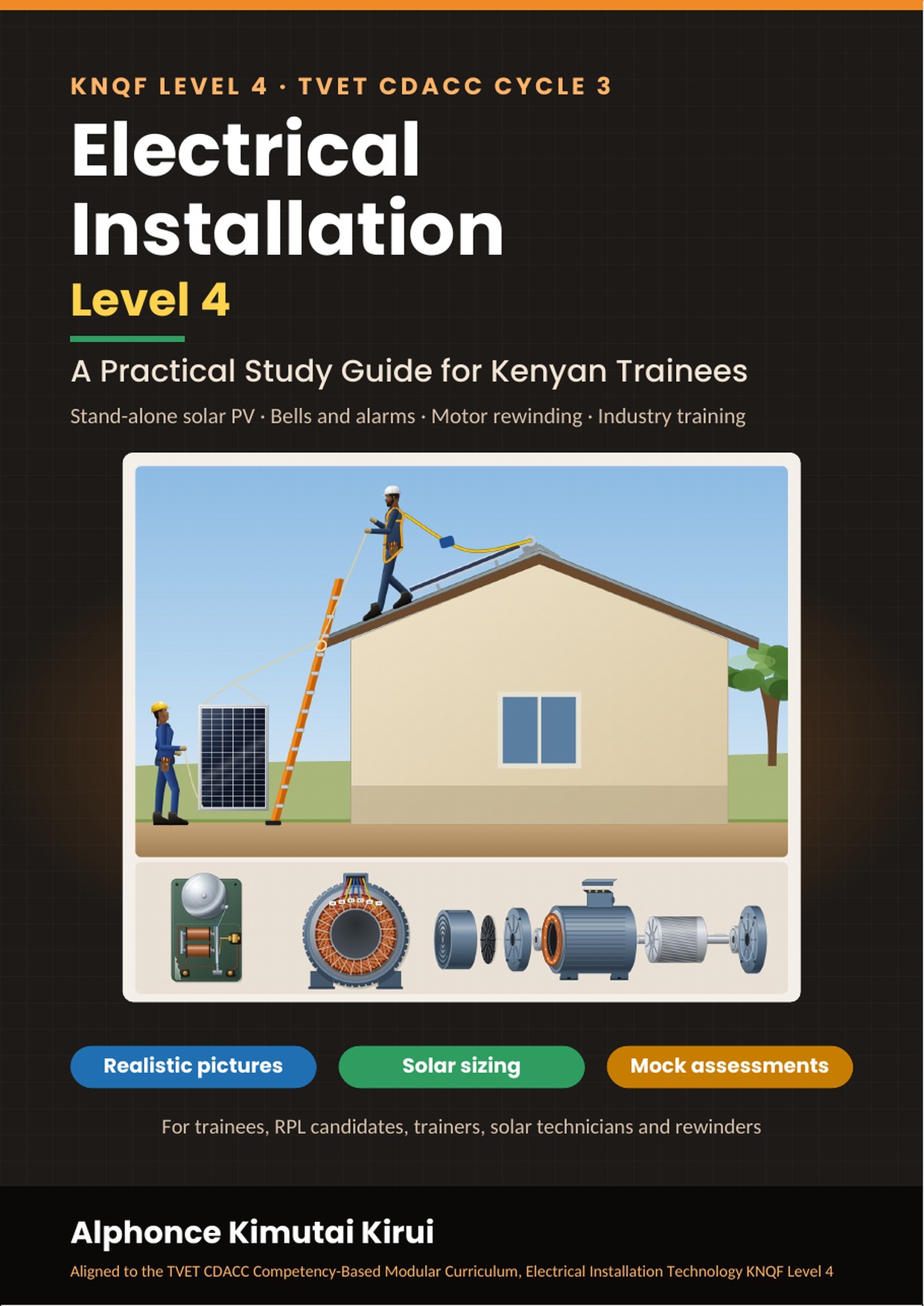
Description
Pass Electrical Installation Level 4 with confidence
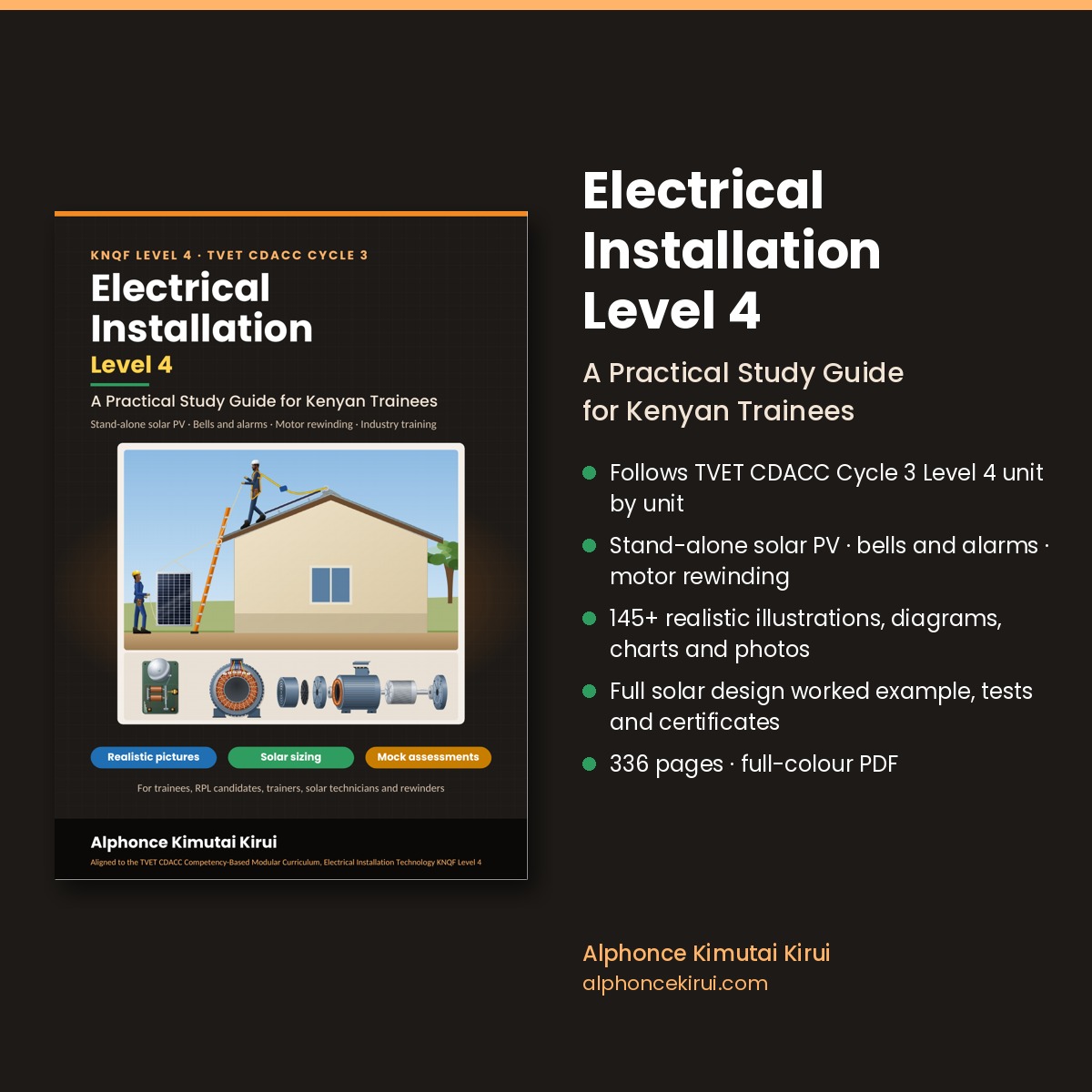
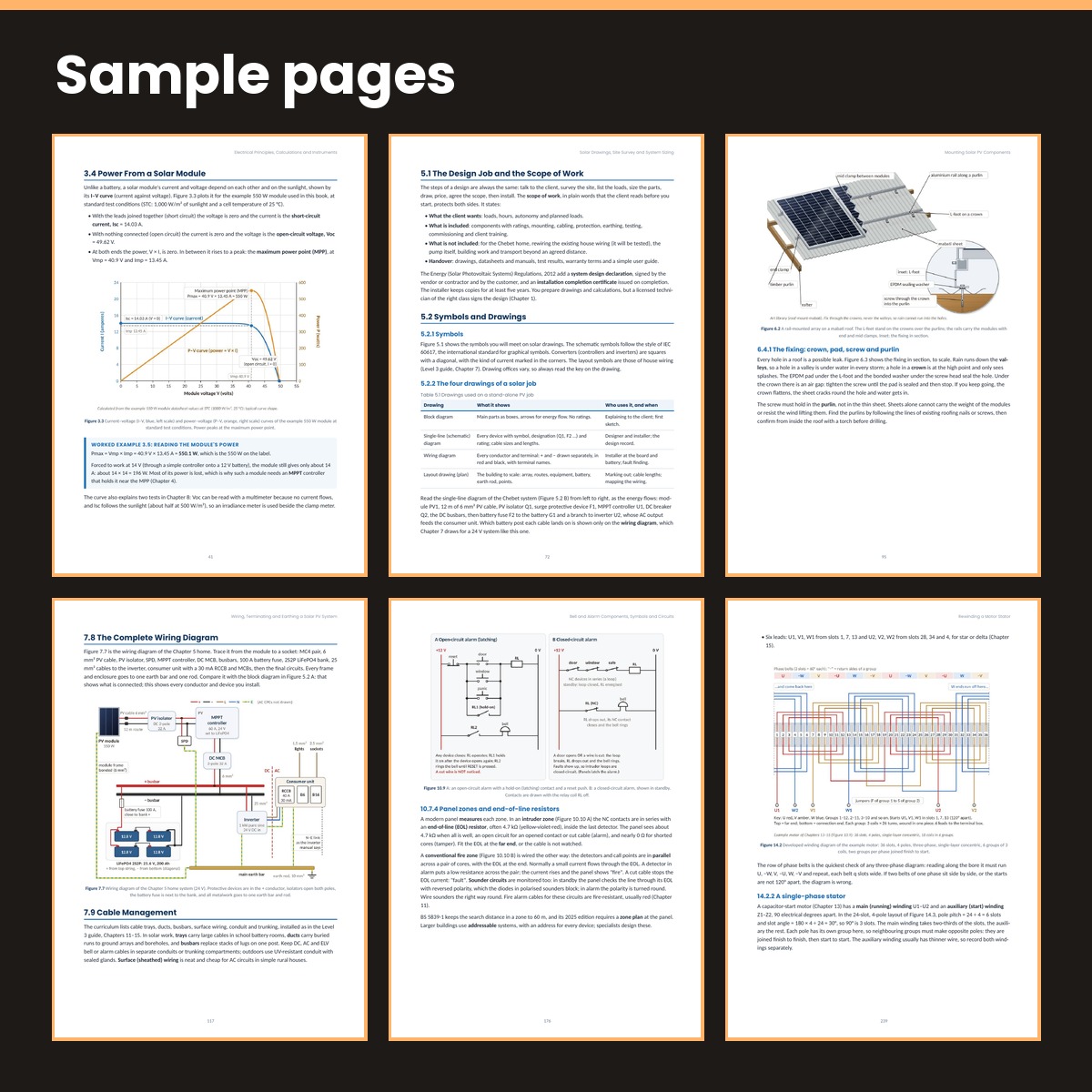
Electrical Installation Level 4: A Practical Study Guide for Kenyan Trainees covers the three new units of the TVET CDACC Electrical Installation Technology Level 4 course (Cycle 3, programme 0713 354A) and the 320-hour industry training. It is written in plain English for KCSE leavers and Level 3 holders and illustrated with realistic pictures, accurate diagrams and data charts: solar panels on mabati roofs, MC4 connectors, charge controllers, battery banks and inverters, alarm panels with zone wiring, stator winding diagrams and motor test benches.
Not sure yet? Download the free sample (43 pages): the front matter, Chapter 1 and the full Chapter 5 on solar drawings, site survey and system sizing.
The Level 3 units (PVC sheathed cable, trunking and conduit) are covered in the companion Electrical Installation Technology Level 3 guide.
Who is this book for?
- Level 4 trainees in vocational training centres, technical colleges and polytechnics
- RPL candidates — solar fundis, alarm installers and motor rewinders preparing for CDACC assessment
- Trainers who need ready-made explanations, worked examples, practical tasks and test records
- Solar technicians working towards EPRA licensing who want solid, Kenyan-specific basics
What’s inside
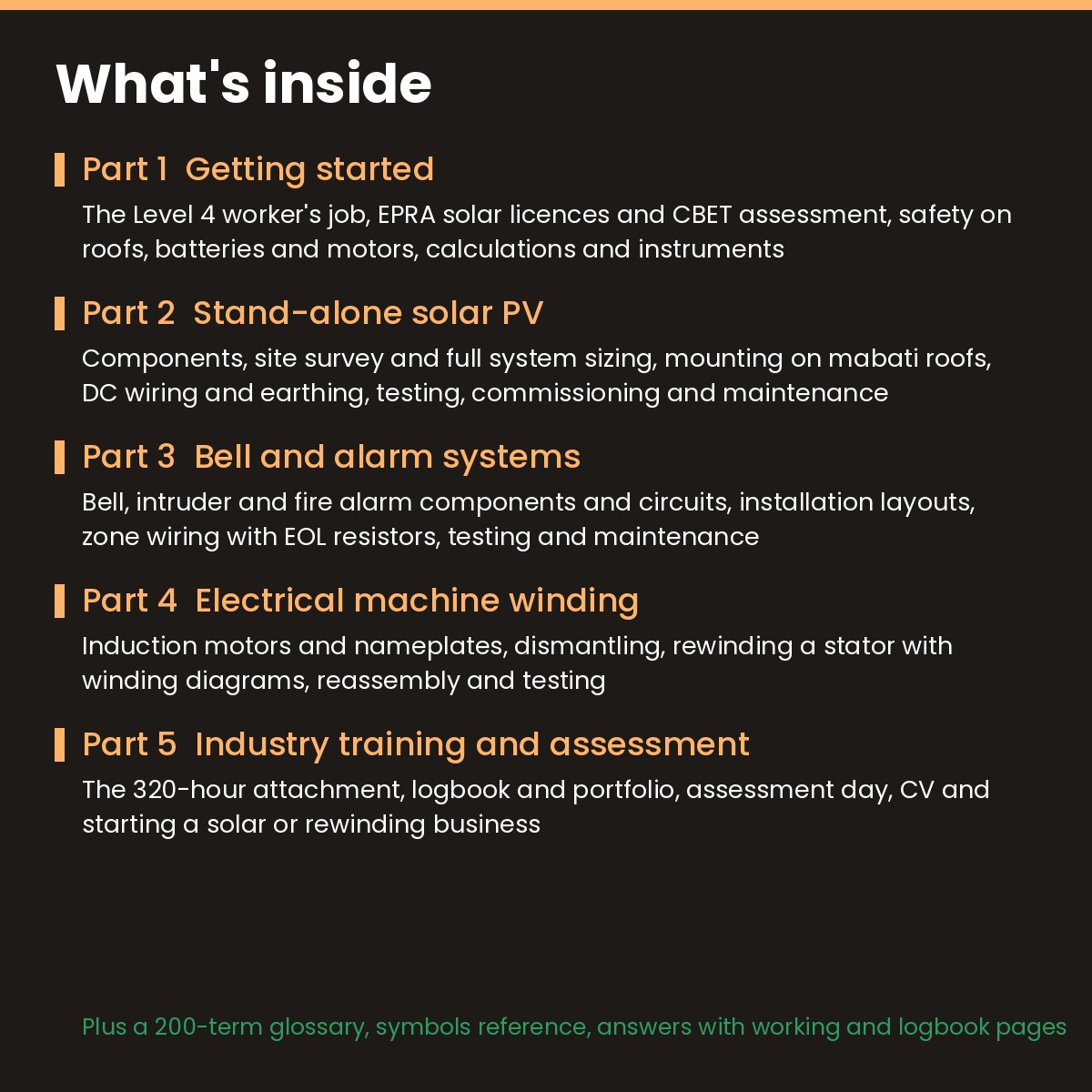
Part 1: Getting Started – the Level 4 worker’s job, EPRA solar licence classes (T1, T2, T3), CBET assessment, safety on roofs, with batteries, capacitors and motors, and the calculations and instruments used in all three units.
Part 2: Stand-Alone Solar PV Systems (Unit 1) – components, drawings, site survey and full system sizing, mounting on mabati roofs and the ground, DC wiring, MC4s, string fuses and earthing, testing and commissioning with a filled certificate, maintenance and fault-finding.
Part 3: Bell and Alarm Systems (Unit 2) – bells, buzzers, intruder and fire alarm devices, symbols and circuits, installation layouts for a home, school and shop, zone wiring with end-of-line resistors, testing and maintenance records.
Part 4: Electrical Machine Winding (Unit 3) – induction motors and nameplates, dismantling, rewinding a stator with full winding diagrams, reassembly, resistance, insulation and polarisation-index tests, and a complete rewind quotation.
Part 5: Industry Training and Assessment – the attachment plan, logbook and portfolio, assessment day, a mock assessment, CV and starting a solar or rewinding business.
Reference: a 200-term glossary, a symbols reference, answers with full working to every practice question, and photocopiable logbook pages.
Why trainees and trainers like it
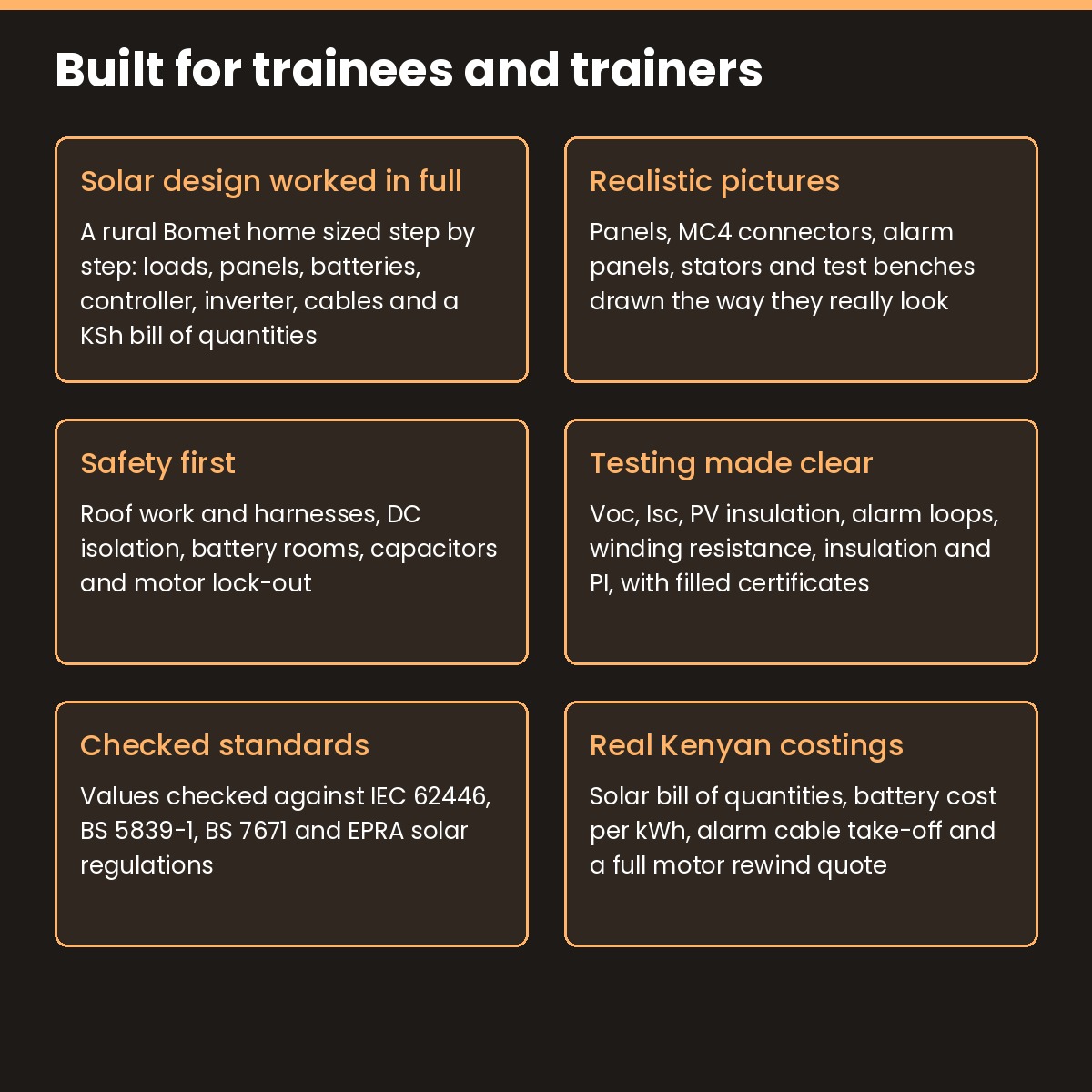
- Follows your curriculum: same units, learning outcomes and hours as the official CDACC Cycle 3 Level 4 curriculum.
- Checked against the standards: values checked against IEC 62446-1, BS 5839-1, BS 7671, EU motor efficiency rules and the EPRA solar regulations, by an independent reviewer.
- Safety first: roof work and harnesses, DC isolation, battery rooms, capacitor discharge and motor lock-out.
- Real Kenyan costings: a solar bill of quantities, battery cost per kWh, alarm cable take-off and a full motor rewind quote.
Format and delivery
PDF, A4, 336 pages, full colour. Download instantly after payment (5 downloads allowed, no expiry). Single-user licence: for your own study or teaching, not for resale or sharing. Pay by M-Pesa or card.
This is an independent study guide. It is not published, endorsed or approved by TVET CDACC, TVETA, EPRA or the Ministry of Education. Always train under a qualified trainer and a licensed technician, and never work on live circuits.


Reviews
There are no reviews yet.