
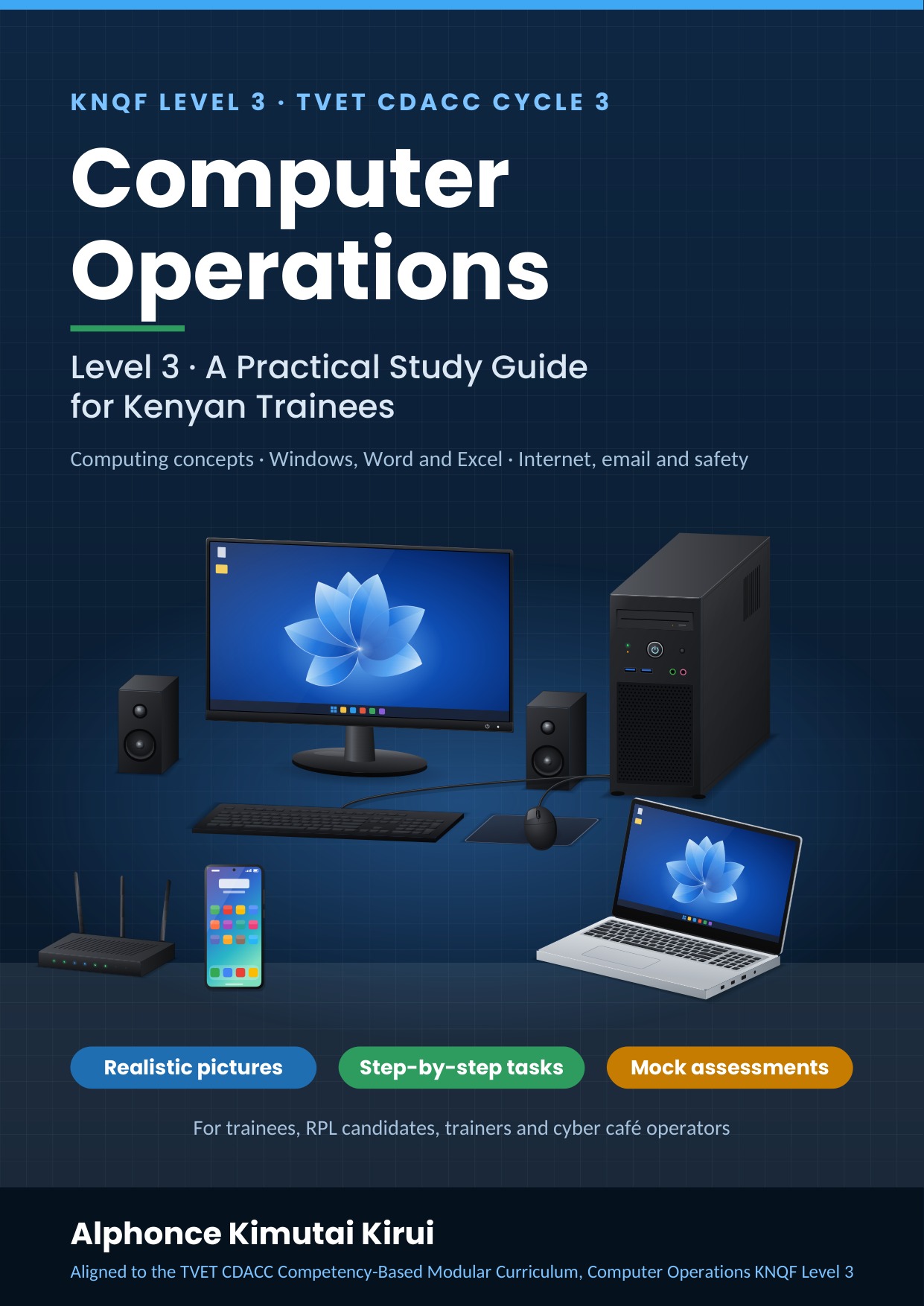
Description
Pass Computer Operations Level 3 with confidence
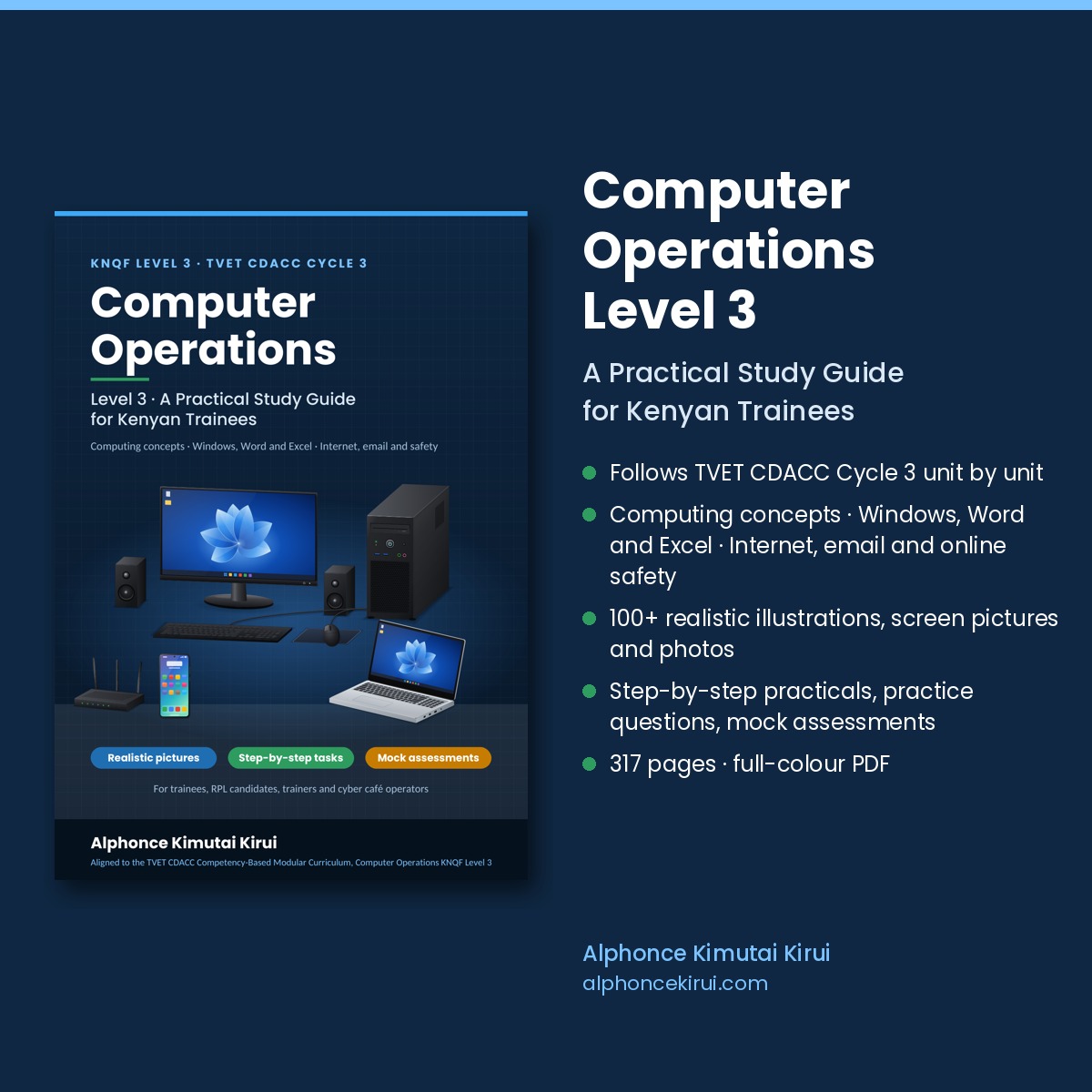
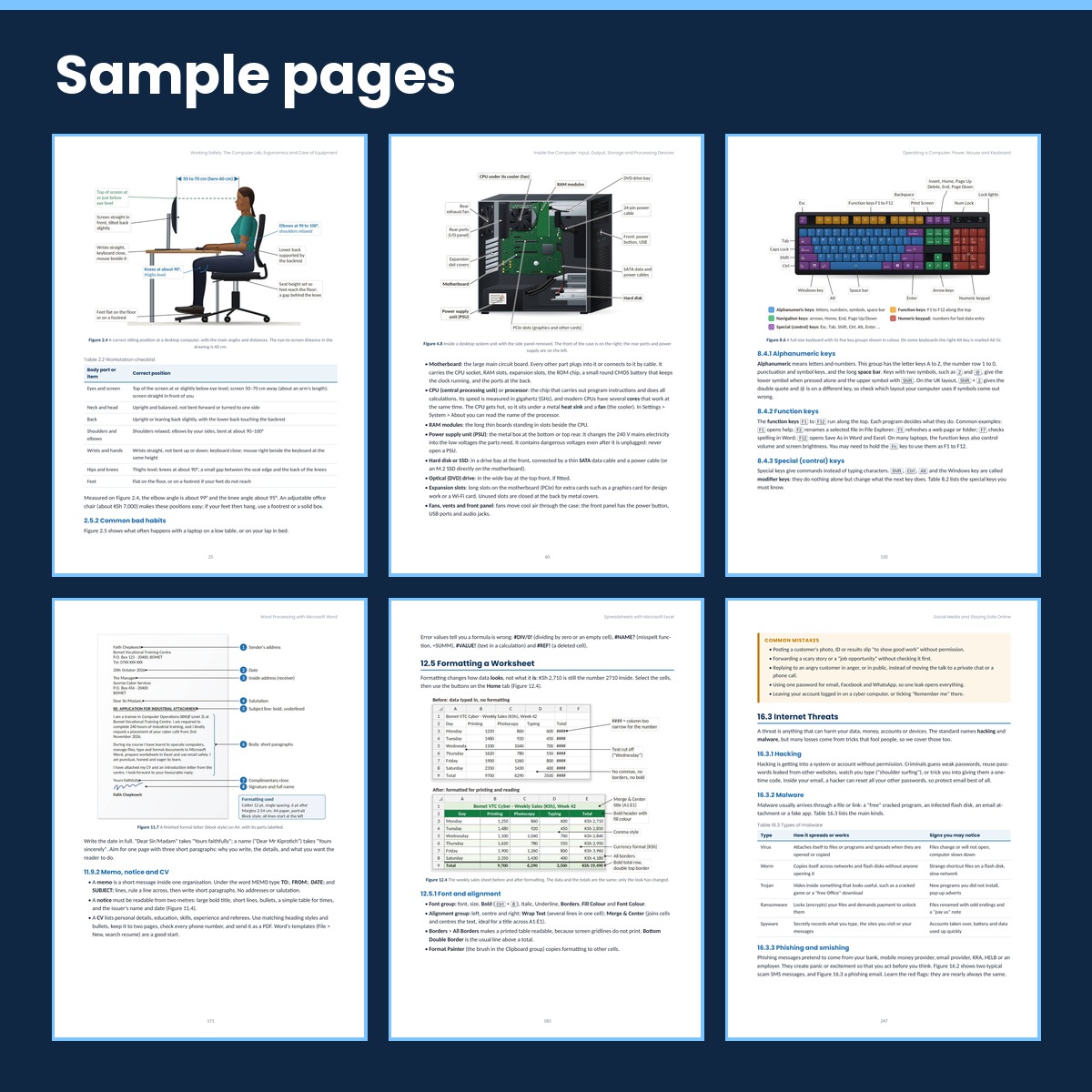
Computer Operations Level 3: A Practical Study Guide for Kenyan Trainees takes you through the whole TVET CDACC Computer Operations (Computer Operator) Level 3 course (Cycle 3, programme 0611 254 A) in the order you are trained and assessed. Every chapter is built around a learning outcome, written in plain English for KCPE-entry trainees, and illustrated with realistic pictures: keyboards and ports, the inside of a system unit, correct sitting posture, a Kenyan computer lab and cyber café, and step-by-step screens of Windows 11, Word, Excel, a web browser, email and a phone.
Not sure yet? Download the free sample (36 pages): the front matter, Chapter 1 and the full Chapter 4 on input, output, storage and processing devices.
Who is this book for?
- Level 3 trainees in vocational training centres, technical colleges and polytechnics
- RPL candidates who already work with computers and want CDACC certification
- Trainers who need ready-made explanations, practical tasks, worked examples and mock assessments
- Cyber café and office workers who want to work faster, safer and more professionally
What’s inside
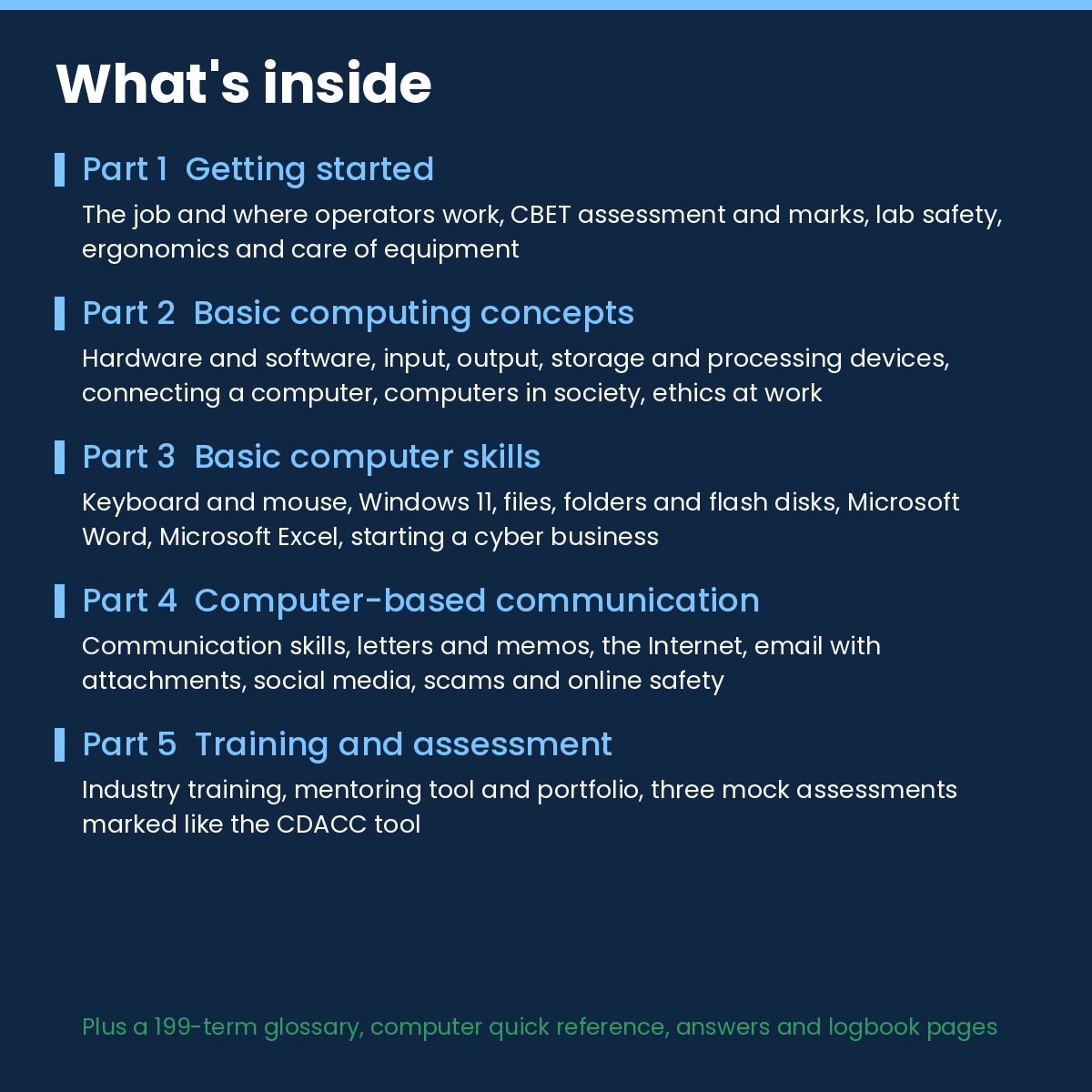
Part 1: Getting Started – the job and where computer operators work, how CBET assessment and marks work, lab safety, ergonomics and care of equipment.
Part 2: Basic Computing Concepts (Unit 1) – hardware and software, types of computers, input, output, storage and processing devices, connecting a complete computer system, computers in schools, supermarkets, hospitals and government, and ethics and values at work.
Part 3: Basic Computer Skills (Unit 2) – switching on and off, mouse and keyboard, Windows 11 and personalising the desktop, files, folders and flash disks, Microsoft Word documents and letters, Microsoft Excel worksheets and charts, and money skills and starting a cyber business.
Part 4: Computer-Based Communication (Unit 3) – communication skills, memos, letters and notices, using the Internet and searching well, creating an email account and sending attachments, social media, scams, passwords and staying safe online.
Part 5: Industrial Training and Assessment – the mentoring tool and portfolio of evidence, what assessors look for, and a mock practical assessment for every unit with a mark checklist weighted like the CDACC tool.
Reference: a 199-term glossary, a computer quick reference (shortcuts, file types, ports, Excel formulas, a cyber price list), answers to every practice question, and photocopiable industrial training logbook pages.
Why trainees and trainers like it
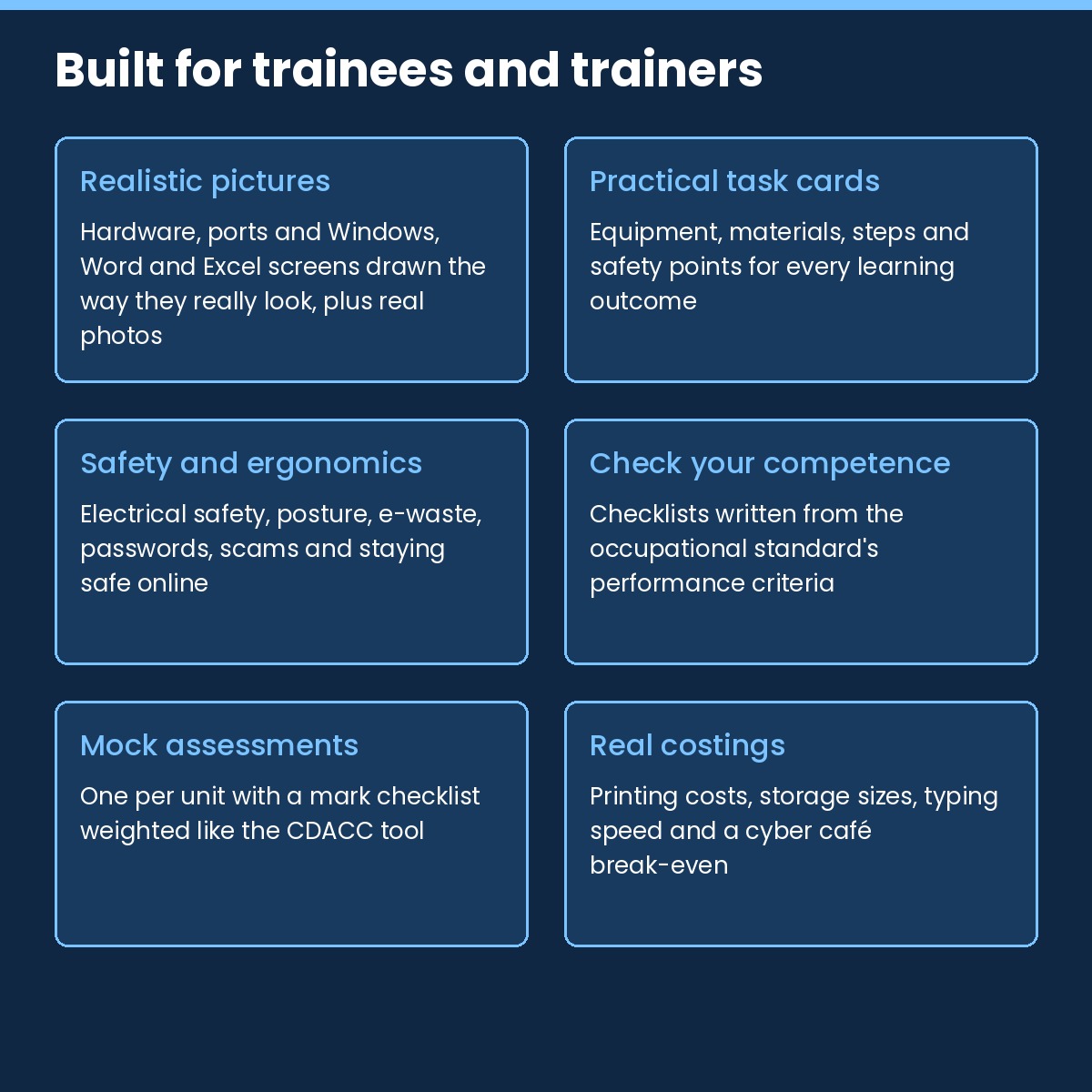
- Follows your curriculum: same units, learning outcomes and hours as the official CDACC Cycle 3 curriculum and occupational standard.
- Realistic pictures: 100+ illustrations, screen pictures and photos, with numbered steps showing exactly where to click.
- Real Kenyan examples: eCitizen, KRA iTax, M-Pesa, cyber price lists, printing costs and a cyber café break-even.
- Safe and inclusive: electrical safety, ergonomics, e-waste, online scams, and accessibility for people with disabilities in every part.
- Assessment ready: competence checklists, 170 practice questions with answers, and three mock assessments.
Format and delivery
PDF, A4, 317 pages, full colour. Download instantly after payment (5 downloads allowed, no expiry). Single-user licence: for your own study or teaching, not for resale or sharing. Pay by M-Pesa or card.
This is an independent study guide. It is not published, endorsed or approved by TVET CDACC, TVETA or the Ministry of Education. Microsoft, Windows, Word and Excel are trademarks of Microsoft Corporation.

Reviews
There are no reviews yet.