
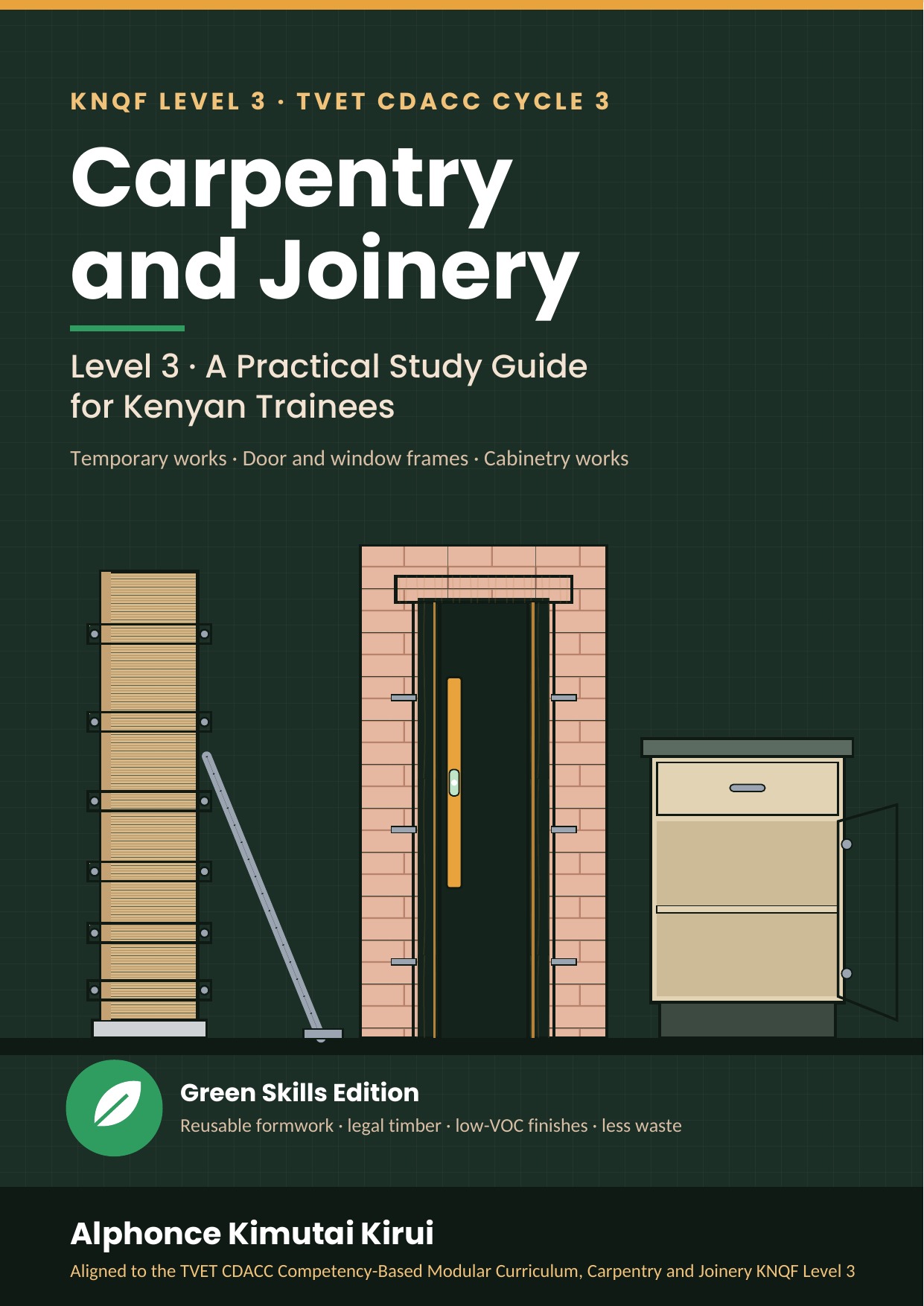
Description
Pass Carpentry and Joinery Level 3 with confidence
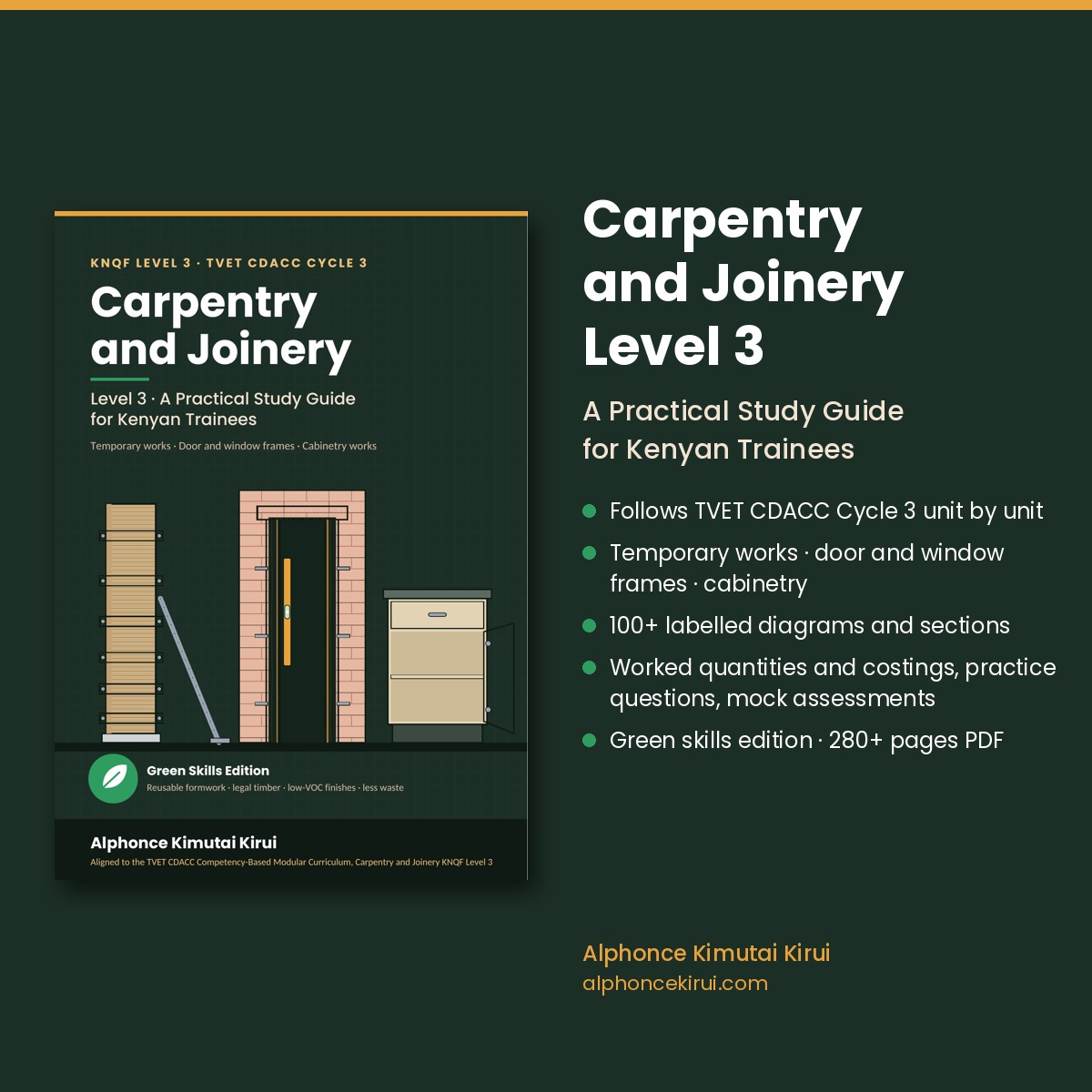
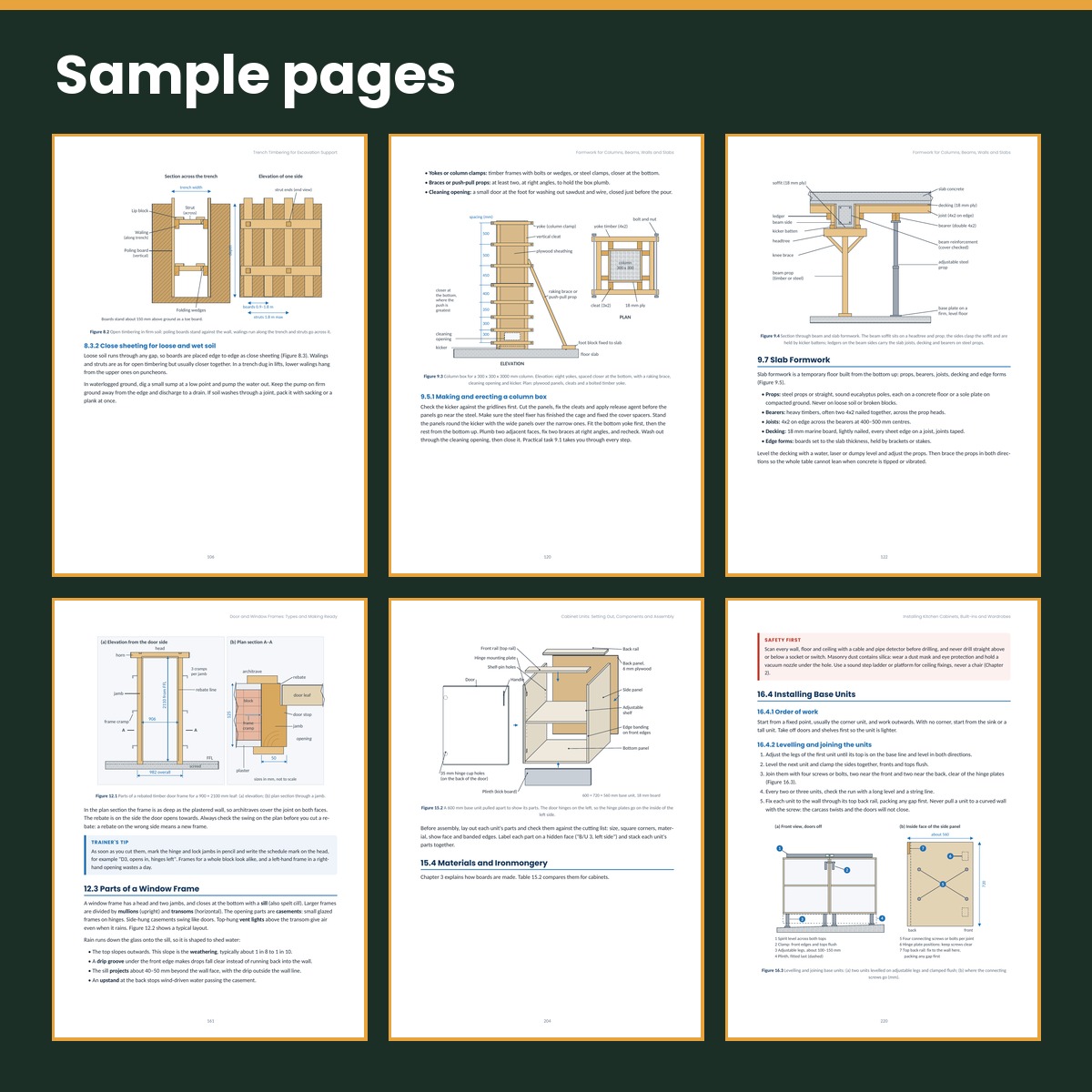
Carpentry and Joinery Level 3: A Practical Study Guide for Kenyan Trainees takes you through the whole TVET CDACC Carpentry and Joinery Level 3 course (Cycle 3, greened version, programme 0732 454 B) in the order you are trained and assessed. Every chapter is built around a learning outcome, written in plain English for KCPE-entry trainees, and illustrated with clear site drawings: trench timbering sections, column boxes with yokes, beam and slab formwork, shuttering panels and box-outs, door and window frames, fixing details, cabinet carcasses, hinge drilling and kitchen elevations.
Not sure yet? Download the free sample (34 pages): the front matter, Chapter 1 and the full Chapter 8 on trench timbering.
Who is this book for?
- Level 3 trainees in vocational training centres, technical colleges and polytechnics
- RPL candidates (working fundis) preparing for CDACC assessment
- Trainers who need ready-made explanations, practical task cards, worked examples and mock assessments
- Anyone starting out in carpentry and joinery who wants to work safely and to a professional standard
What’s inside
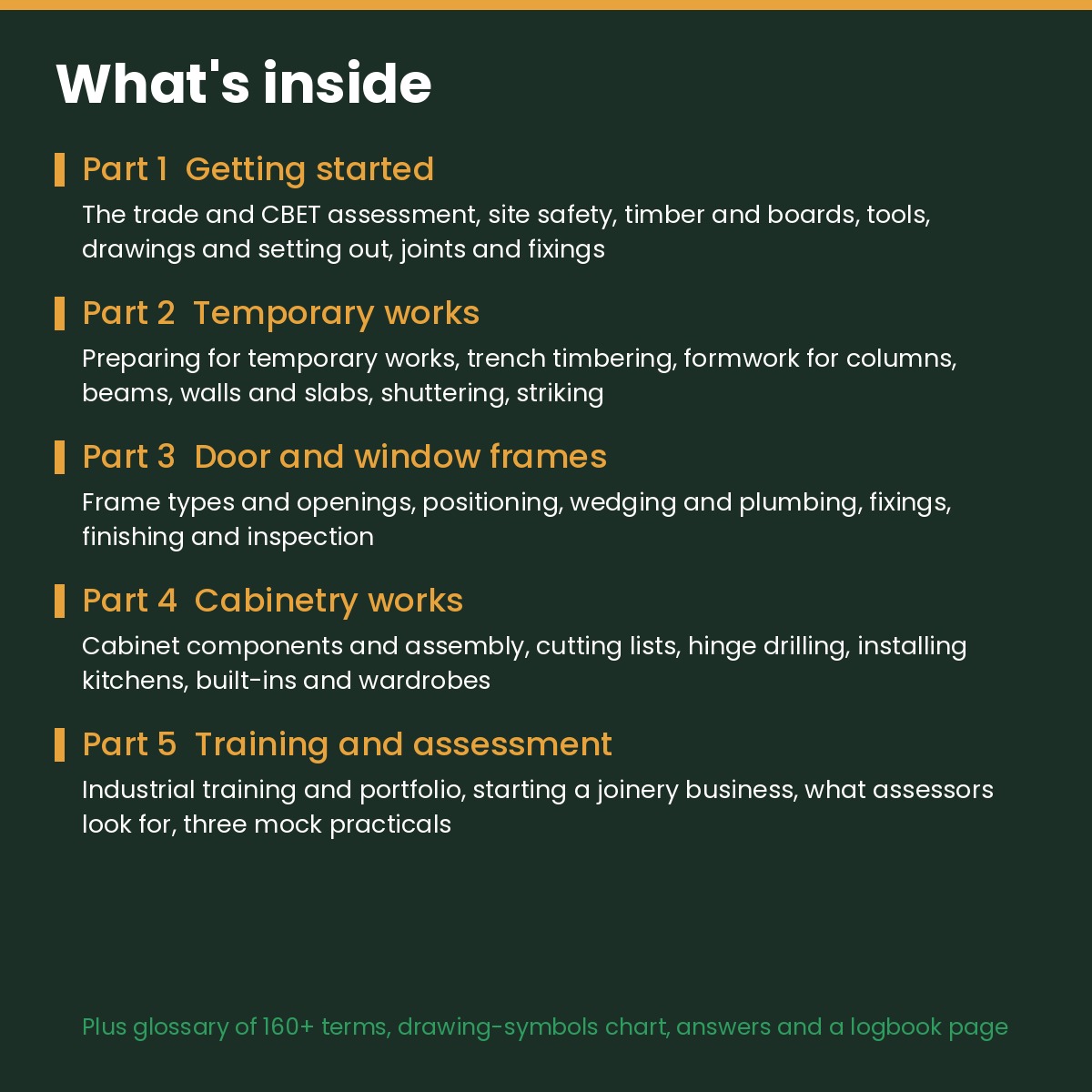
Part 1: Getting Started – the trade in Kenya, how CBET assessment and certification work, site safety and housekeeping, timber and manufactured boards, hand and power tools, drawings, measuring and setting out, and woodworking joints, fasteners and adhesives.
Part 2: Temporary Works (Unit 1) – preparing for temporary works with cutting lists and risk assessment, trench timbering for different soils, formwork for columns, beams, walls and slabs (the heaviest-weighted element in the unit), shuttering, sealing and pre-pour checks, and safe striking, cleaning and reuse.
Part 3: Door and Window Frames (Unit 2) – frame types and parts, common Kenyan sizes, measuring and preparing openings, positioning, wedging, plumbing and packing frames, fixings and reinforcement, finishing and inspection.
Part 4: Cabinetry Works (Unit 3) – reading cabinet drawings and surveying the room, carcass components, cutting lists and sheet layouts, assembly and squaring, cup-hinge and 32 mm system drilling, and installing kitchen cabinets, built-ins and wardrobes.
Part 5: Industrial Training and Assessment – the mentoring tool and portfolio of evidence, starting a small joinery business and pricing jobs, what assessors look for in each unit, and a mock practical assessment for every unit with a 100-mark checklist weighted like the CDACC tool.
Reference: glossary of 160+ trade terms, drawing symbols, abbreviations and inch-to-metric conversions, answers to every practice question, and a photocopiable industrial training logbook page.
Why trainees and trainers like it
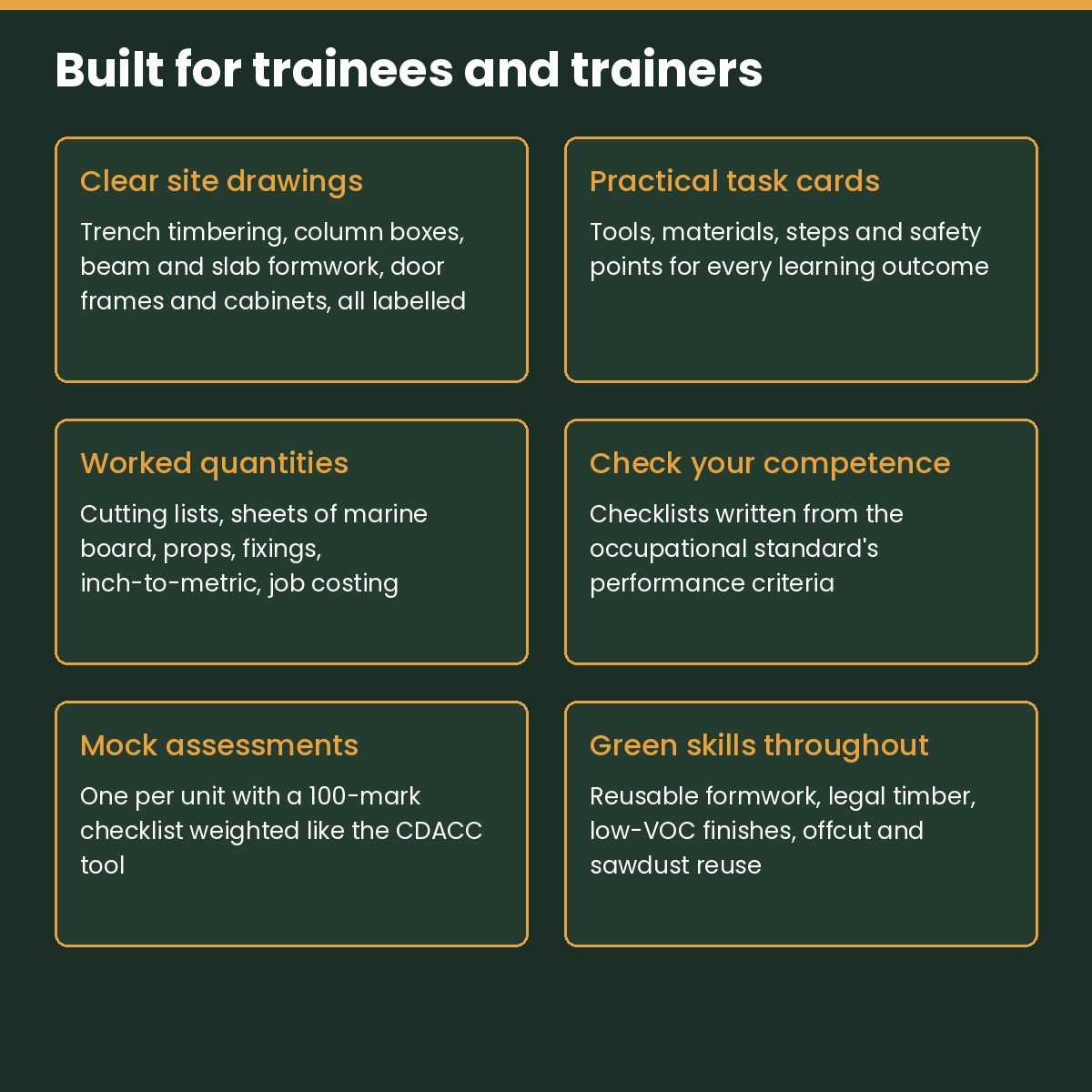
- Follows your curriculum: same units, learning outcomes and hours as the official CDACC Cycle 3 curriculum and occupational standard.
- 100+ clear drawings: every section, joint and fixing drawn and labelled, so you can see what the words mean.
- Quantities and costing: timber in feet and metres, sheets of marine board, props, fixings, the cost of a door frame, a base unit and a kitchen.
- Assessment ready: competence checklists written from the performance criteria, 170 practice questions with answers, and three mock practicals.
- Green skills built in: reusable formwork, legally sourced timber, low-VOC finishes, offcut and sawdust reuse.
Format and delivery
PDF, A4, 284 pages, full colour. Download instantly after payment (5 downloads allowed, no expiry). Single-user licence: for your own study or teaching, not for resale or sharing. Pay by M-Pesa or card.
This is an independent study guide. It is not published, endorsed or approved by TVET CDACC, TVETA or the Ministry of Education.


Reviews
There are no reviews yet.