
Description
Pass Fashion Design Level 3 with confidence
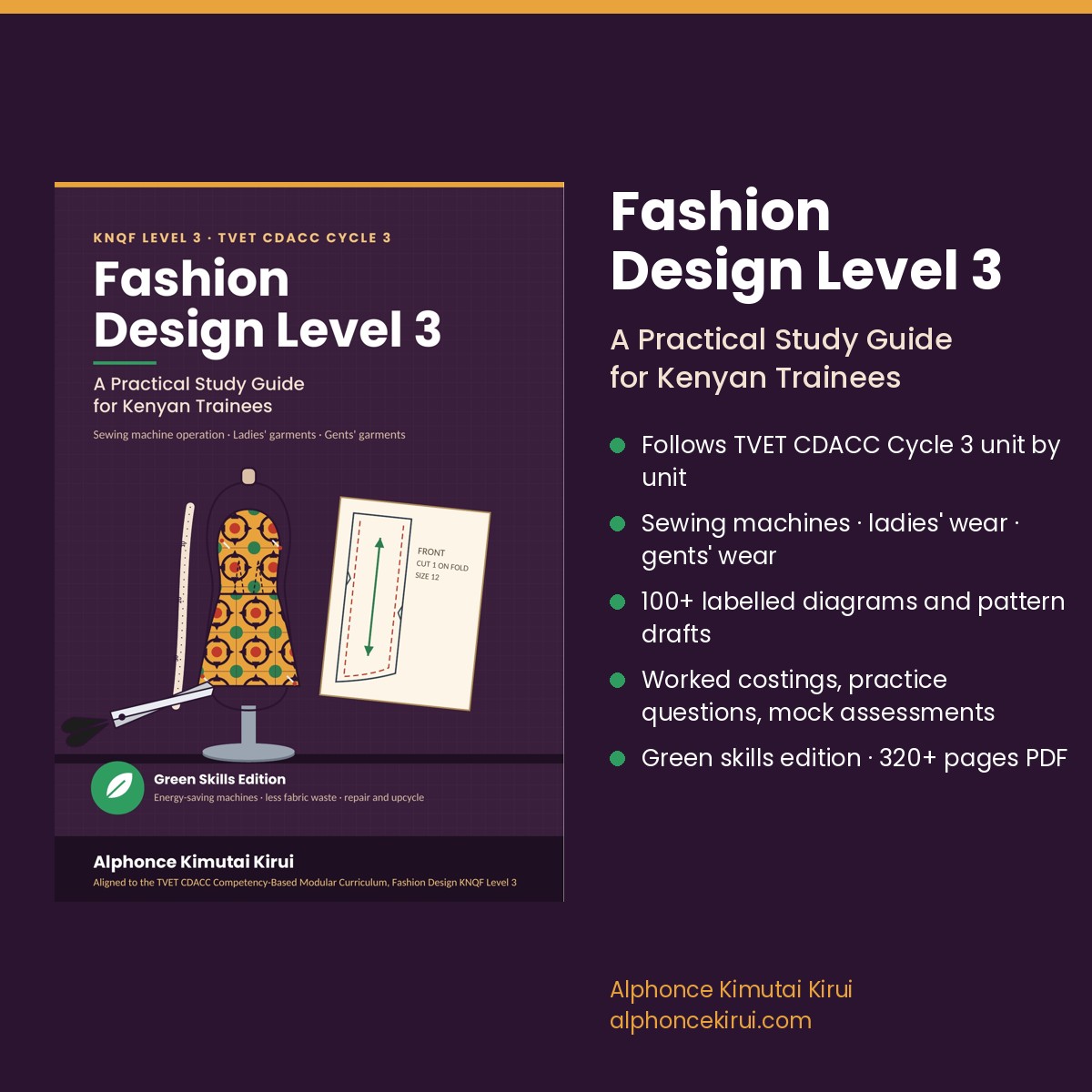
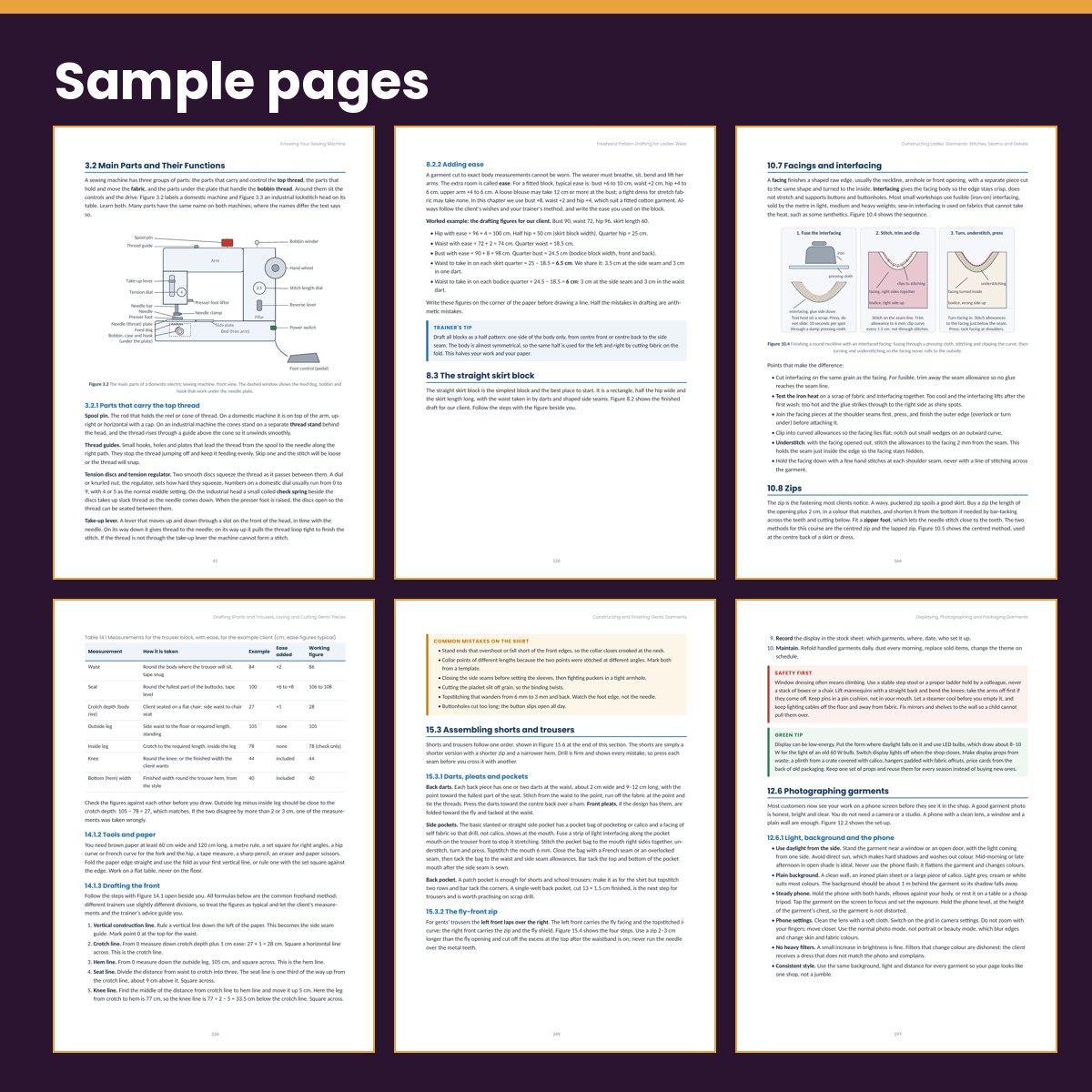
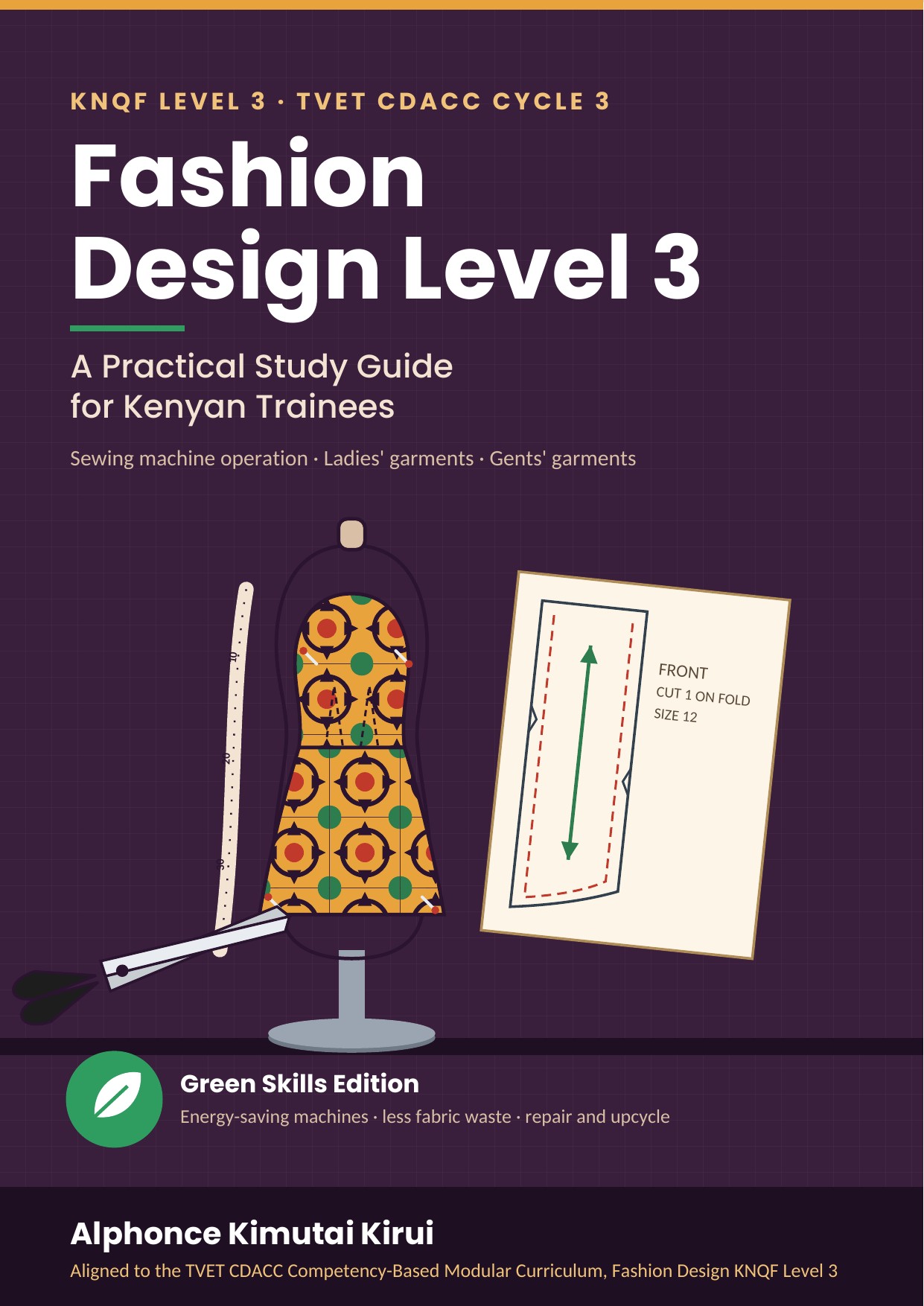
Fashion Design Level 3: A Practical Study Guide for Kenyan Trainees takes you through the whole TVET CDACC Fashion Design Level 3 course (Cycle 3, greened version, programme 0212 254B) in the order you are trained and assessed. Every chapter is built around a learning outcome, written in plain English for KCPE-entry trainees, and illustrated with clear teaching drawings: labelled sewing machines, threading paths, stitch faults, measurement charts, pattern blocks drafted step by step, lay plans, seam cross-sections and assembly sequences.
Not sure yet? Download the free sample (36 pages): the front matter, Chapter 1 and the full Chapter 4 on setting up and operating the sewing machine.
Who is this book for?
- Level 3 trainees in vocational training centres, technical colleges and private fashion schools
- RPL candidates (working tailors and dressmakers) preparing for CDACC assessment
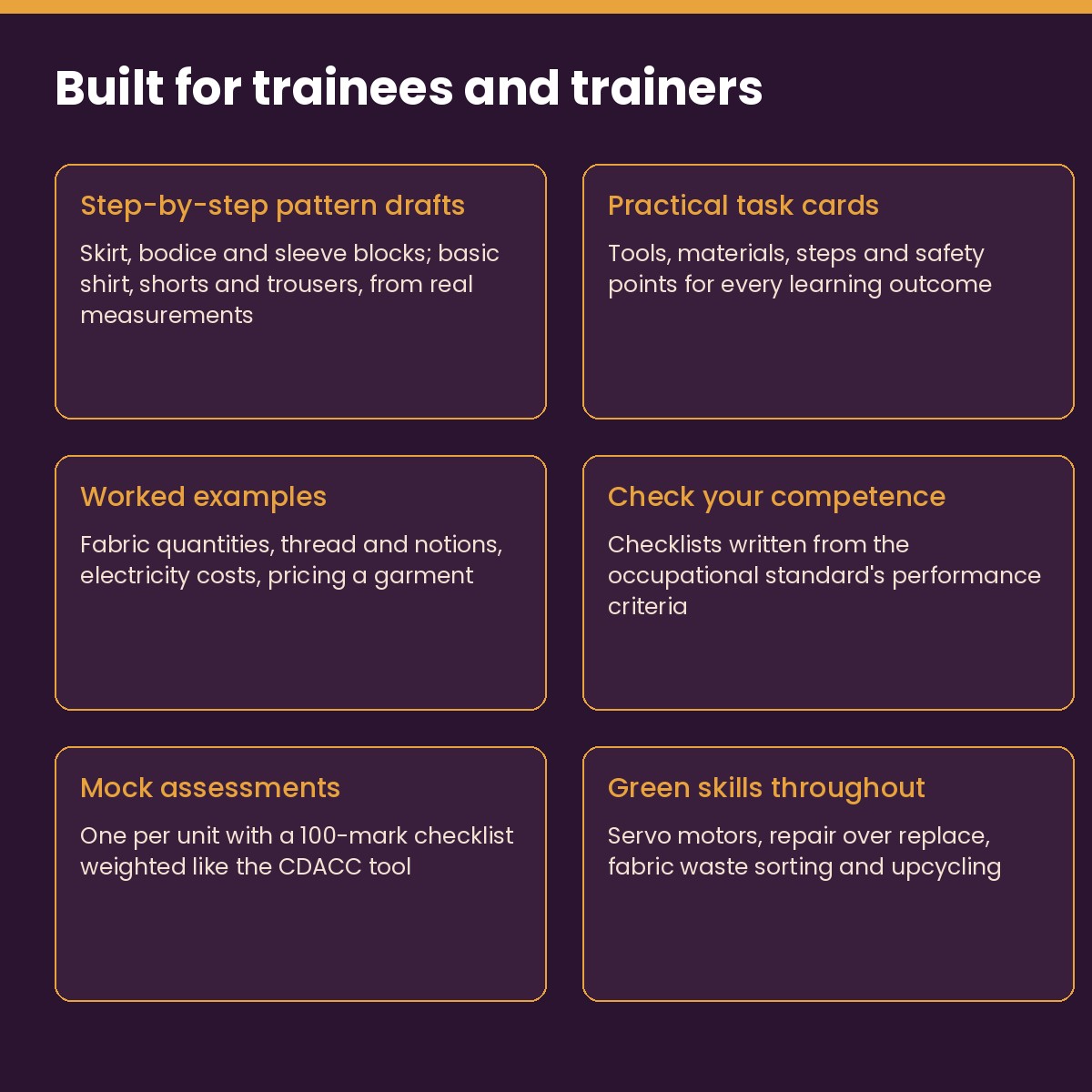
- Trainers who need ready-made explanations, practical task cards, worked examples and mock assessments
- Anyone starting a tailoring business who wants to work to a professional standard
What’s inside
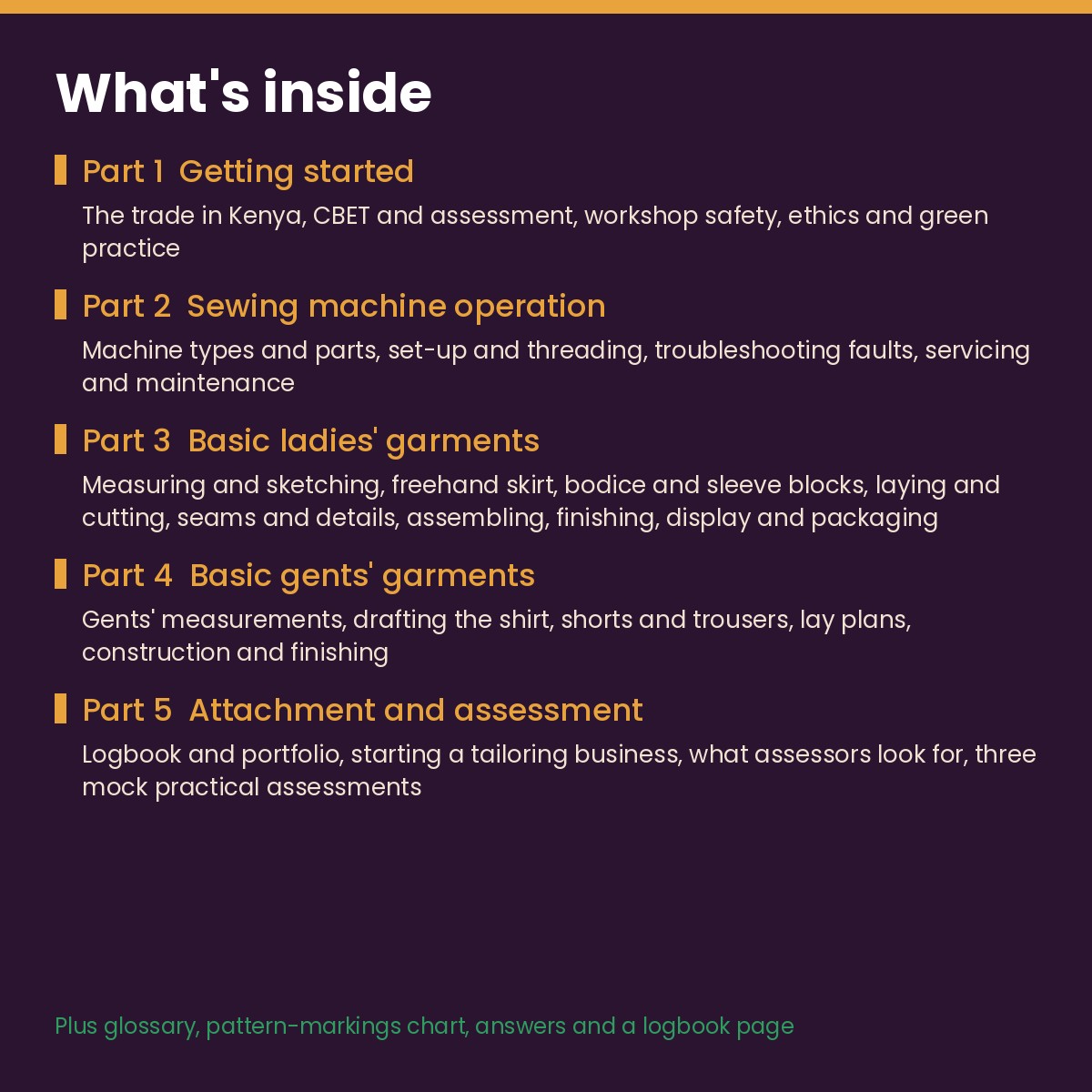
Part 1: Getting Started – the fashion and tailoring trade in Kenya, how CBET assessment and certification work, workshop safety, ethics, customer care and green practice.
Part 2: Sewing Machine Operation (Unit 1) – machine types and every part explained, how a lockstitch forms, needles and threads, set-up and threading, tension and stitch adjustment, a complete fault–cause–remedy guide, and a servicing and maintenance programme (the heaviest-weighted element in the unit).
Part 3: Basic Ladies’ Garments Construction (Unit 2) – client consultation and body measurements, the 8-head croquis and flat sketches, freehand drafting of the skirt, bodice and sleeve blocks with a worked client example, sustainable lay plans and cutting, hand and machine stitches, seams, darts, zips, waistbands, facings and set-in sleeves, step-by-step assembly of a simple skirt, blouse and dress, finishing, display, phone photography and sustainable packaging.
Part 4: Basic Gents’ Garments Construction (Unit 3) – gents’ measurements and size chart, drafting the basic shirt (yoke, placket, collar and stand, sleeve and cuff), the trouser and shorts block, fly front and belt-loop waistband, lay plans on drill and striped fabric, and construction in industrial order.
Part 5: Industrial Attachment and Assessment – logbook and portfolio of evidence, what the mentoring tool checks, starting a small tailoring business, what assessors look for in each unit, sample oral questions, and a mock practical assessment for every unit with a 100-mark checklist weighted like the CDACC tool.
Reference: glossary of 150+ trade terms, pattern-markings and sewing-symbols chart, answers to every practice question, and a photocopiable attachment logbook page.
Why trainees and trainers like it
- Follows your curriculum: same units, learning outcomes and hours as the official CDACC Cycle 3 curriculum and occupational standard.
- 100+ clear diagrams: every draft, seam and sequence drawn and labelled, so you can see what the words mean.
- Quantities and costing: fabric for a skirt, blouse, shirt or trousers; thread and notions; electricity per hour; pricing a garment and a school uniform set.
- Assessment ready: competence checklists written from the performance criteria, 160 practice questions with answers, and three mock practicals.
- Green skills built in: servo motors and treadle machines, repair over replacement, fabric waste sorting and upcycling, reusable packaging.
Format and delivery
PDF, A4, 322 pages, full colour. Download instantly after payment (5 downloads allowed, no expiry). Single-user licence: for your own study or teaching, not for resale or sharing. Pay by M-Pesa or card.
This is an independent study guide. It is not published, endorsed or approved by TVET CDACC, TVETA or the Ministry of Education.

Reviews
There are no reviews yet.